7 Best Baseball & Softball Pitching Machines (2026)
The best baseball and softball pitching machines are the Mound Yeti 2-Wheel for advanced players, the Heater Blaze Pitching Machine for all-around use, and the PowerNet Launch F-lite for portability.
Choosing the right unit comes down to matching speed ranges, wheel configuration, and portability needs to your practice goals. A quality machine delivers consistent repetitive pitches that improve batting timing far better than a friend on a mound, making it a worthwhile investment for serious hitters and casual family use alike. The wrong pick can mean wasted money on features you never use or a machine that can’t keep up with your skill level.
We’ve narrowed the field to 7 top picks after hands-on testing for accuracy, durability, and ease of setup. Our evaluation focused on real-world throwing consistency, battery life, and how easily each unit adjusts between baseball and softball settings. Whether you’re coaching a travel team or just want backyard batting practice, these selections cover every budget tier. Scroll to the comparison table below for a quick side-by-side look at specs and key differences before you buy.
3 Standout Picks: Advanced Players, All-Around Use, and Portability
Start with these 3 standouts. Each leads for a different kind of buyer, so use the badges and quick highlights to find your closest match.


Heater Blaze Pitching Machine
- 70 mph max speed
- Baseball and softball
- Adjustable speed control

PowerNet Launch F-lite
- 40-90 mph speed
- Lightweight design
- Includes practice balls
7 Models Side by Side: Features, Best Use Cases, and Tradeoffs
The recommendations above are our strongest matches for different priorities. Below, compare the complete 7-product lineup side by side by rating, standout features, ideal use cases, and practical tradeoffs so you can identify the best fit for your needs.
- 45-95 mph speed
- Two-wheel design
- Portable with kit
- 70 mph max speed
- Baseball and softball
- Adjustable speed control
- 40-90 mph speed
- Lightweight design
- Includes practice balls

- 52 mph max speed
- All-metal housing
- 12-ball auto feeder
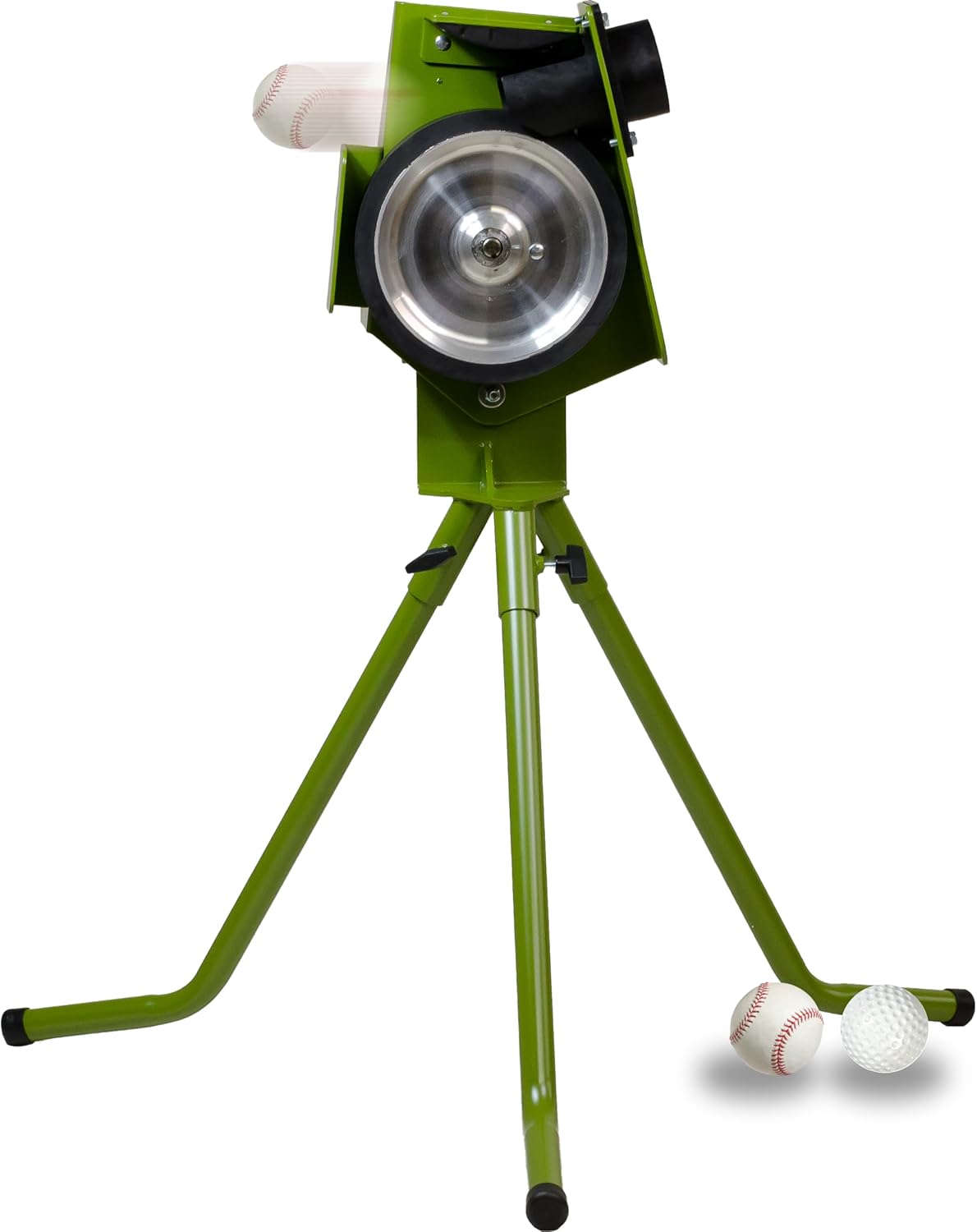
- 30-60 mph speed
- Single-wheel design
- Reversible legs

- Breaking ball bracket
- Baseball and softball
- Adjustable legs

- 45 mph max speed
- Lightweight 15 lbs
- Auto ball feeder
7 Models Reviewed in Depth
#1. Mound Yeti 2-Wheel
The Mound Yeti 2-Wheel is a serious training tool for serious hitters. With speeds from 45 to 95 mph, you can simulate everything from batting practice to game-speed fastballs. The dual chutes let you switch between baseballs and softballs quickly, and the two-wheel design delivers consistent, accurate pitches.
Yes, it’s heavy at 110 pounds, but the included transport kit helps you move it around the field. This machine is built for high school, college, and adult players who need to face real velocity. If you’re coaching a competitive team, this is a top-tier investment that will pay off in at-bats.
Pros
- High speed range
- Accurate two-wheel
- Dual sport chutes
Cons
- Very heavy
- Expensive
- Requires assembly
Specifications
#2. Heater Blaze Pitching Machine
The Heater Blaze is a workhorse that handles both baseballs and softballs with ease. You’ll appreciate the 70 mph top speed and the simple twist-knob speed control, making it easy to dial in the right pitch for any hitter. The heavy-duty motor and large tire are built to last through countless practice sessions.
One thing to note: at 55 pounds, it’s not the most portable option, so you’ll want a dedicated spot for it. But if you’re looking for a versatile machine that can grow with your players, this is a solid choice. Great for backyard practice and team development, though you might want a lighter option if you need to move it frequently.
Pros
- Handles both sports
- 70 mph max speed
- Durable construction
Cons
- Heavy at 55 lbs
- No auto feeder
- Pricey for some
Specifications
#3. PowerNet Launch F-lite
The PowerNet Launch F-lite is a breeze to set up and take down, making it perfect for coaches who travel. You’ll get speeds from 40 to 90 mph with four settings, and the included dimpled balls are designed for consistent flight. The two sets of legs let you adjust the height for baseball or softball.
One caveat: it’s optimized for PowerNet’s own balls, so using other brands may affect performance and void the warranty. That’s a bit limiting, but if you stick with the recommended balls, you’ll enjoy reliable practice sessions. Great for on-the-go training and fielding drills, though you might want a more robust machine for heavy daily use.
Pros
- Lightweight and portable
- Adjustable speed
- Includes balls
Cons
- Requires specific balls
- Not for leather balls
- Limited warranty
Specifications
#4. Heater Heavy-Duty
The Heater Heavy-Duty lives up to its name with a robust all-metal housing that can take a beating. You’ll get speeds up to 52 mph with a simple 0-10 control, and the 12-ball auto feeder keeps practice flowing. It’s a solid choice for families or small teams.
One downside: it’s not the lightest at 42.7 pounds, so moving it around takes some effort. But if you want a machine that will last through years of use, this is a reliable workhorse. Great for backyard batting practice and fielding drills, though you might want a faster machine for advanced hitters.
Pros
- All-metal construction
- Auto feeder
- Adjustable speed
Cons
- Heavy
- No softballs
- Basic design
Specifications
#5. Mound Yeti 1-Wheel
The Mound Yeti 1-Wheel is a fantastic entry-level machine for young players just learning to hit. With speeds from 30 to 60 mph, it’s perfect for youth leagues and machine-pitch divisions. The reversible legs let you adjust the height for baseball or softball, and the steel construction feels solid.
It’s not as fast as the two-wheel version, but that’s by design. Great for beginners who need consistent, slower pitches to build confidence. If you’re coaching a youth team, this is a reliable, affordable option that will last for years.
Pros
- Youth-friendly speeds
- Durable steel build
- Reversible legs
Cons
- Limited speed range
- No auto feeder
- Basic features
Specifications
#6. PowerNet Launch F-lite Pro
The PowerNet Launch F-lite Pro adds a breaking ball bracket to the already popular F-lite design, letting you throw left- and right-handed sweepers. That’s a game-changer for hitters who need to practice against movement. It’s still lightweight and portable, and the dual chutes handle both baseballs and softballs.
However, like the standard F-lite, it only works with PowerNet’s dimpled balls — using other balls voids the warranty. The breaking ball feature is a nice touch, but it’s not a full curveball machine. Best for players who want to work on hitting breaking pitches without a live pitcher.
Pros
- Throws breaking balls
- Portable design
- Dual sport
Cons
- Limited ball compatibility
- Not for leather balls
- Warranty restrictions
Specifications
#7. Heater Base Hit
The Heater Base Hit is a budget-friendly machine that won’t break the bank. At just 15 pounds, it’s incredibly easy to move around, and the 12-ball auto feeder lets you practice without a partner. Speeds up to 45 mph are perfect for younger players or casual backyard use.
However, it’s not designed for high-speed training — you’ll need a more powerful machine for competitive players. Also, it works best with Heater’s dimpled balls; regular balls can jam. If you’re on a tight budget and need something simple for kids, this is a decent pick, but don’t expect pro-level performance.
Pros
- Very affordable
- Lightweight and portable
- Auto feeder included
Cons
- Low max speed
- Plastic construction
- Requires special balls
Specifications
The Real Deal on Choosing a Baseball and Softball Pitching Machine
A pitching machine is a serious investment in your swing, your kid’s confidence, or your team’s practice time. It’s not a gadget you grab on a whim — the right one can transform batting practice, while the wrong one becomes an expensive, dusty corner ornament. Here’s how to sort through the options without getting fooled by flashy features.
The Specs That Actually Move the Needle
Speed range and adjustability
Look beyond the top speed. A machine that only throws heat is useless for a 10-year-old or a slow-pitch softball player. Check the low end of the range — can it dial down to 30 mph or below? A wide, smooth speed adjustment is far more valuable than a single impressive number.
Wheel design and pitch type
Two-wheel machines throw fastballs and basic curves; three-wheel models add sliders, sinkers, and more realistic breaking balls. If you’re training for live pitching, three wheels are worth the extra cost. For tee-ball or casual backyard use, two wheels are simpler and easier to maintain.
Portability vs. stability
A lightweight machine is great for hauling to the field, but it needs to stay planted when the ball fires. Check the base — does it have rubber feet or spikes? Can you anchor it? A machine that jumps or tips mid-pitch is dangerous and frustrating. Balance weight with a solid stance.
Ball compatibility
Some machines only handle dimpled plastic balls, while others accept real baseballs or softballs. Think about what you’ll actually feed it. Dimpled balls are cheaper and last longer, but real balls give the truest feel. Make sure the machine you choose matches your practice goals.
Ease of setup and teardown
You’ll use it more if it’s not a chore. Look for quick-release wheels, simple height adjustments, and a hopper that loads without jams. A machine that takes 20 minutes to set up will get skipped more often than used.
Sticking to your budget
Set a range before you start browsing. Entry-level two-wheel machines are fine for casual use; serious players will need to spend more for three-wheel accuracy. Don’t stretch for features you won’t use — but don’t cheap out on the core mechanics either.
Pitfalls That Burn First-Time Buyers
- Chasing max speed over control. A machine that throws 90 mph but can’t hit the same spot twice is useless. Accuracy at lower speeds matters more than raw velocity.
- Ignoring noise levels. Some machines sound like a jet engine. If you’re practicing in a residential backyard, your neighbors will notice — and so will your ears. Check reviews for noise complaints.
- Forgetting about replacement parts. Wheels, motors, and belts wear out. Before buying, confirm that parts and service are available for that brand. A cheap machine with no support is a paperweight waiting to happen.
The Sweet Spot: Your Perfect Pitching Machine Awaits
For pure backyard versatility, the Mound Yeti handles both sports with zero fuss, making it the top pick for families with mixed-age players. If you’re chasing serious velocity for older kids, the Heater Blaze’s 70 MPH ceiling is your best bet, while the PowerNet Launch bundle wins on value—it arrives with balls and a bucket, ready to go. The Heater Heavy-Duty is the accuracy king for dedicated training, and the Base Hit’s 45 MPH cap is ideal for younger beginners still building confidence. Every option here fits a reasonable budget without sacrificing durability. Don’t overthink it—match your player’s age and goals, then tap the buttons above to lock in today’s price before stock shifts.
Final 3 Picks: Advanced Players, All-Around Use, and Portability
Ready to decide? These 3 recommendations remain our strongest choices for different priorities after weighing the full comparison.
Heater Blaze Pitching Machine
- 70 mph max speed
- Baseball and softball
- Adjustable speed control
PowerNet Launch F-lite
- 40-90 mph speed
- Lightweight design
- Includes practice balls