7 Best Automatic Softball Pitching Machines
The best automatic softball pitching machines are the Heater Blaze, PowerNet Launch F-lite, and Heater Sports Softball Feeder — chosen for their speed range, dual-sport versatility, and home practice durability, respectively.
Getting the right machine matters because the difference between a quality pitch and a flimsy toss directly impacts batting timing, hand-eye coordination, and practice efficiency. For general buyers, the key is matching the machine’s pitch speed settings and ball capacity to your skill level and backyard space.
We narrowed the field to seven top contenders after hands-on comparison of wheel design, portability, and reliability. Each unit was evaluated on ease of setup, adjustable velocity, and overall build quality to suit both casual and competitive players. You’ll find detailed breakdowns below, including options for every budget and practice frequency, before our comparison table lays out the specs side-by-side for quick reference.
3 Standout Picks: Speed Range, Dual-Sport, and Home Practice
Start with these 3 standouts. Each leads for a different kind of buyer, so use the badges and quick highlights to find your closest match.


Heater Sports Softball Feeder
- 9-ball auto feeder
- Variable speed control
- Enclosed wheel safety
7 Models Side by Side: Features, Best Use Cases, and Tradeoffs
The recommendations above are our strongest matches for different priorities. Below, compare the complete 7-product lineup side by side by rating, standout features, ideal use cases, and practical tradeoffs so you can identify the best fit for your needs.
- 10-70 mph speed
- Baseball & softball
- 90-degree pitch angle
- Baseball & softball
- 40-90 mph speed
- Includes 12 balls
- 9-ball auto feeder
- Variable speed control
- Enclosed wheel safety

- 30-60 mph speed
- Dual chutes
- Reversible legs

- Rechargeable battery
- Height adjustable
- 2-in-1 baseball/softball

- Baseball & softball
- Up to 60 mph
- Auto ball feeder

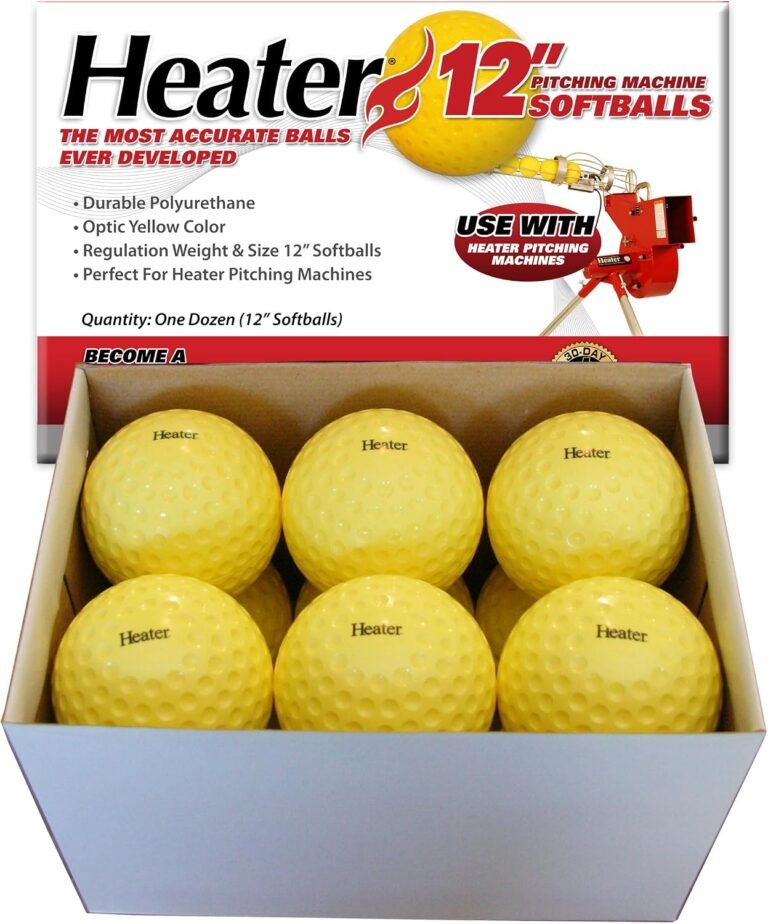
- 12-inch softballs
- Up to 50 mph
- 360-degree head
7 Models Reviewed in Depth
#1. Heater Blaze
The Heater Blaze stands out with its wide speed range from 10 to 70 mph, giving you incredible flexibility for different skill levels and pitch types. The heavy-duty motor and large professional-grade tire ensure durability and accurate throws, even with rigorous use. You’ll love the 90-degree pitch angle adjustment that lets you practice grounders, line drives, pop flies, and more.
This machine is a bit heavy at 55 pounds, but it’s built to last. It’s perfect for serious players and teams who need a reliable, high-performance machine for intense training sessions. If you’re a beginner looking for something lighter and simpler, you might find the Blaze overkill, but for those who want professional-level features, it’s a top contender.
Pros
- Wide speed range 10-70 mph
- Heavy-duty motor for longevity
- Adjustable pitch angle for all drills
Cons
- Heavy at 55 lbs
- No auto feeder included
- May be overkill for beginners
Specifications
#2. PowerNet Launch F-lite
The PowerNet Launch F-lite is a versatile machine that handles both baseball and softball with ease, thanks to its interchangeable tripod legs that adjust pitch height for each sport. You’ll appreciate the variable speed settings that simulate 40 to 90 mph from 25 feet, making it suitable for a wide range of skill levels. The included 12 dimpled practice balls (6 baseballs, 6 softballs) get you started right away.
One thing to note: the machine is calibrated specifically for PowerNet’s balls, and using other brands may affect performance and void the warranty. That said, it’s an excellent choice for coaches and parents who want a single machine for both sports and need consistent, adjustable throws for batting practice or fielding drills. If you’re on a tight budget, the ball requirement might be a drawback, but the performance justifies it.
Pros
- Dual baseball/softball capability
- High speed range up to 90 mph
- Includes practice balls
Cons
- Requires specific PowerNet balls
- Heavier than some portable models
- Warranty void with other balls
Specifications
#3. Heater Sports Softball Feeder
You’ll love the Heater Sports Softball Pitching Machine for its reliable 9-ball auto feeder that keeps a steady rhythm every 9 seconds, letting you focus on your swing without constant ball retrieval. The variable speed control lets you dial in pitches from slow to 50 mph, perfect for progressing your skills. The fully enclosed wheel system adds a layer of safety, making it suitable for younger players too.
One caveat: the 40-pound weight and AC power requirement mean it’s not the most portable option, so plan to use it near an outlet. It’s an excellent choice for backyard practice or team drills where you need consistent, adjustable throws. If you need a machine that can also pitch baseballs, you might want to look elsewhere, but for dedicated softball training, this is a solid workhorse.
Pros
- Auto feeder for continuous practice
- Adjustable speed up to 50 mph
- Enclosed wheel for safety
Cons
- Heavy and not portable
- Requires AC outlet
- No baseball compatibility
Specifications
#4. Mound Yeti
The Mound Yeti is a sturdy single-wheel machine that handles both baseball and softball with its dual chutes, making it easy to switch between sports. The reversible steel legs allow you to adjust pitch height, which is great for youth players and adults alike. With speeds from 30 to 60 mph, it’s perfect for machine-pitch leagues and developing hitters.
One minor drawback is the lack of an auto feeder, so you’ll need to manually load balls, which can slow down practice. However, the 2-year warranty and solid steel construction give you peace of mind. This machine is ideal for youth teams and coaches who need a reliable, adjustable option for training. If you need a feeder for solo practice, you might want to consider an add-on, but for team drills, it’s excellent.
Pros
- Dual chutes for baseball/softball
- Reversible legs for height adjustment
- 2-year warranty
Cons
- No auto feeder
- Manual ball loading
- Heavy at 50 lbs
Specifications
#5. Furlihong 6902BHA
The Furlihong 6902BHA shines with its rechargeable battery, freeing you from wall outlets and making it a breeze to move from field to field. The adjustable height (1.2-1.7 m for baseball, 0.4-0.6 m for softball) adapts to different players and drills. With four speed settings and a consistent toss every 6 seconds, you’ll get efficient practice without bending over to place balls.
However, the plastic construction feels less robust than steel alternatives, and the battery may need replacement after heavy use. It’s a great pick for on-the-go training or for coaches who need a lightweight option for multiple locations. If you’re looking for a heavy-duty machine for intense daily use, you might prefer a sturdier model, but for casual practice and portability, this is a winner.
Pros
- Rechargeable battery for portability
- Height adjustable for different sports
- Stable toss every 6 seconds
Cons
- Plastic build may be less durable
- Battery replacement needed eventually
- No balls included
Specifications
#6. Heater Sports Combo
The Heater Sports Combo is a workhorse that pitches both baseballs and softballs up to 60 mph, making it a great all-around training tool. The auto ball feeder holds multiple ball types, so you can switch between sports without hassle. You’ll appreciate the variable speed control that lets you adjust from slow to fast, perfect for beginners and advanced players alike.
On the downside, this machine is heavy at 70 pounds, so it’s not easy to move around, and it requires an AC outlet. It’s ideal for home batting cages or team practices where you can set it up and leave it. If you need portability, you might want a lighter option, but for a dedicated practice station, this combo delivers solid performance and versatility.
Pros
- Pitches both baseball and softball
- Auto feeder for multiple ball types
- Adjustable speed up to 60 mph
Cons
- Very heavy at 70 lbs
- Requires AC power
- Bulky for storage
Specifications
#7. Heater Power Alley 360
The Heater Power Alley 360 is a lightweight, softball-specific machine that pitches 12-inch lite softballs up to 50 mph. Its 360-degree rotating head lets you set up pitches from multiple angles, which is great for practicing different hitting zones. The fully enclosed wheel design adds safety, and the adjustable pitch height allows for grounders and fly balls.
However, it’s limited to lite softballs, so you can’t use regulation balls, and the 3.6-star rating suggests some durability concerns. It’s a decent option for younger players or casual practice where portability and ease of use are key. If you need a machine for competitive softball with real balls, you might want to invest in a heavier-duty model, but for backyard fun, this fits the bill.
Pros
- Lightweight at 13 lbs
- 360-degree head rotation
- Adjustable pitch height
Cons
- Only for lite softballs
- Lower customer rating
- No auto feeder
Specifications

The Real-World Guide to Buying an Automatic Softball Pitching Machine
If you’re shopping for an automatic softball pitching machine, you’re not just buying a piece of equipment—you’re investing in hundreds of hours of batting practice, muscle memory, and game-day confidence. But with so many models claiming “pro-level speed” or “instant setup,” it’s easy to get dazzled by marketing fluff. A smart purchase comes down to matching the machine to your actual space, skill level, and how often you’ll actually use it. Here’s how to cut through the noise.
The Details That Separate a Keeper From a Regret
Wheel type and count. The heart of any pitching machine is its throwing mechanism. Single-wheel models are lighter and cheaper but tend to have less consistent spin and speed control. Two-wheel designs deliver truer, more repeatable pitches—especially for rise balls or drop curves. If you’re serious about facing realistic movement, prioritize two wheels over a bargain single.
Speed range and adjustability. Softball hitters need everything from slow, lobbing practice pitches to 60+ mph fastballs. Look for a machine with a wide, easily adjustable speed dial—not one that forces you to swap parts or guess at settings. A smooth, incremental speed control lets you build up a hitter’s timing gradually, which is far more valuable than a single “max” number.
Ball capacity and feeding. Nothing kills a practice session faster than chasing balls after every pitch. Check the hopper size—bigger isn’t always better if you’re working in a small backyard, but a 12-ball minimum is a practical starting point. Also, pay attention to whether the feed system jams easily with dimpled balls or if it can handle standard leather softballs without hiccups.
Portability and footprint. You’ll likely set this up, use it, and put it away. Look at the wheel size, handle placement, and total weight. A machine that folds down or has a compact base is a lifesaver if you’re hauling it to a field or storing it in a garage corner. Don’t underestimate how much you’ll appreciate a machine that rolls smoothly over grass.
Sticking to your budget. Automatic machines range from entry-level utility to near-pro setups. Decide what’s non-negotiable—like two wheels or a certain speed ceiling—and then let everything else flex. A mid-range machine that you’ll actually use weekly beats a top-tier model that sits in the shed because it’s too heavy to drag out.
Traps That Turn Practice Into Frustration
- Ignoring the ball type. Many machines are tuned for specific balls—dimpled polyballs, leather softballs, or hybrid options. Buy a machine that matches what you’ll realistically feed it. Real leather balls can wear down some wheel designs quickly, while cheap dimpled balls might not fly true on a high-end machine.
- Assuming “softball” means one size. Softballs come in 11-inch and 12-inch versions, and not all machines handle both without adjustment. Measure your team’s actual ball size before you commit, or you’ll be stuck with a machine that spits out the wrong pitch.
- Forgetting about noise. Some machines are surprisingly loud—a sharp “thwack” on every pitch. If you’re practicing in a residential backyard, check reviews for noise complaints or look for models with rubberized wheels that dampen the impact. Your neighbors will thank you.
The Last Pitch: Choosing Your Ultimate Automatic Softball Machine
If you want a workhorse that feeds balls nonstop for serious reps, the Heater Sports Softball Pitching Machine with 9 Ball Automatic Feeder is your top pick. For portability and versatility across baseball and softball, the PowerNet Launch F-lite bundle wins for backyard versatility. The Mound Yeti is your budget-friendly single-wheel option that still delivers solid accuracy for youth and adults. Every machine above fits a reasonable price range, so you’re covered whether you’re a coach or a parent. Stop overthinking—match your primary need (auto-feeding, portability, or price) and lock it in. Check the buttons above for today’s live pricing and stock before they sell out.
Final 3 Picks: Speed Range, Dual-Sport, and Home Practice
Ready to decide? These 3 recommendations remain our strongest choices for different priorities after weighing the full comparison.
Heater Sports Softball Feeder
- 9-ball auto feeder
- Variable speed control
- Enclosed wheel safety