

Master the Art of Leading Off a Base Today
Leading off a base in baseball is all about getting a good start after reaching base. You’ll want to take a stance that allows you to react quickly to a batted ball or a throw. This involves proper foot placement and body positioning.
A good lead-off helps you steal bases or advance on a hit. It’s a game of inches and timing. You need to practice your reads to know when to break. Many players find it challenging to balance distance with safety.
TL;DR:
- Get a good starting distance from the base.
- Position your feet to move both forward and backward.
- Watch the pitcher’s movements.
- Be ready to react instantly to the ball.
- Practice makes perfect for better leads.
Ready to take your base-running game up a notch? Let’s walk through exactly how to get the best lead-off possible.
Mastering Your Lead-Off: Getting a Head Start on the Bases
Leading off a base is where the real fun begins for a runner. It’s your chance to get a good distance away from the bag. This helps you react faster to a ball hit into play. You also get a better chance to steal. We’ll show you how to get a solid lead.
The Foundation: Your Stance and Setup
Your starting position is key. You need to be balanced and ready to move. This means your feet should be placed correctly. It also means your body should be in an athletic posture. Let’s break it down.
Foot Placement for Maximum Mobility
Where you put your feet matters a lot. You want them about shoulder-width apart. This gives you a stable base. Your lead foot should be slightly ahead of your back foot. Think of it like a sprinter’s blocks. Your weight should be distributed evenly. You should feel light on your feet. This allows you to move in any direction quickly.
Body Positioning for Explosive Movement
Once your feet are set, focus on your body. Bend your knees slightly. This is your ready position. Keep your back straight but not stiff. Your arms should be relaxed, hanging loosely. You want your head up and eyes on the pitcher. This is so you can see every move they make. A slight forward lean is good. It helps you explode forward.
The “Unhooked” Lead
Many coaches teach an “unhooked” lead. This means your back foot isn’t touching the base. It’s slightly off the back corner. This allows you to start moving forward without lifting your foot. It’s a quicker way to get going. Research and found that this split second can be the difference. It helps you gain momentum faster (Baseball America).
Finding Your Optimal Distance
How far off the base can you go? It depends on the pitcher. It also depends on your comfort level. A good starting point is 6-8 feet. This is measured from the back edge of the base. You should feel like you can still get back to the base easily. But you also need enough room to get a good jump forward. Experiment to find what works best for you.
The “Jump-Stop” Technique
A common technique is the jump-stop. You take a small hop forward, landing with both feet. This helps you establish a forward momentum. Then, you can decide whether to go or return. Many players find this useful. It helps them gauge the pitcher’s throw and their own speed. This is a foundational skill for most runners.
Reading the Pitcher: Your Secret Weapon
The pitcher is your primary focus. Their actions tell you everything. You need to watch them closely. This is how you know when to run or stay put. It’s a constant battle of wits.
Watching the Pitcher’s Non-Throwing Arm
Many experts say to watch the pitcher’s non-throwing arm. When it goes up to deliver the pitch, that’s your cue. Some pitchers have tells. They might lift their front leg higher. Others might have a slight pause. You need to study each pitcher individually. Observing these subtle movements is key.
The “Pitcher’s Glove” Tip
Another common tip is watching the pitcher’s glove. When the glove goes to the pitcher’s chest, they are about to deliver. This is a common indicator. However, some pitchers can hide the ball well. It takes practice to develop this read. Many players train their eyes to catch these details.
Understanding the Pitcher’s Stance
There are two main stances: the windup and the stretch. In the windup, the pitcher has more freedom to move. This can make it harder for runners. In the stretch, they are more committed to throwing. This usually means a quicker pitcher’s delivery. You need to adjust your lead based on their stance.
What About the Catcher?
While the pitcher is your main focus, don’t forget the catcher. Keep an eye on their setup. Are they looking at you? This might mean they are considering a pick-off. A quick glance from the catcher is a warning sign. A prolonged stare means they might throw. You need to be aware of their presence too.
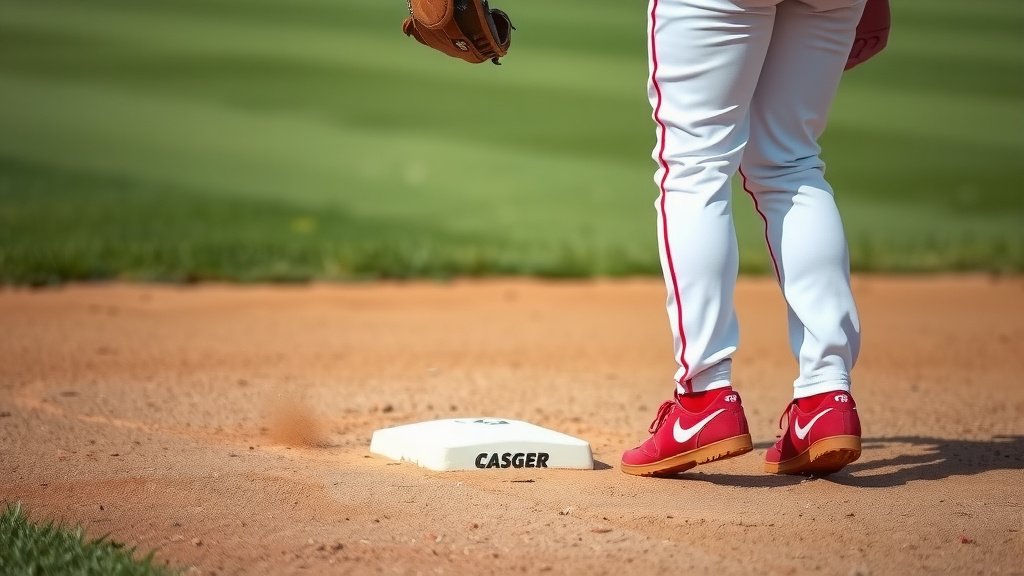
Reacting to the Ball: Go Time!
Once you’ve read the pitcher, you need to react. This is where your practice pays off. When do you actually break for the next base? Or when do you bail back?
The “Batted Ball” Read
If the ball is hit, you need to see where it goes. If it’s hit fair and into the outfield, you’re looking to advance. If it’s hit on the ground, your priority is getting back to the base. If it’s a pop-up or fly ball, you freeze until the ball is caught. Don’t get picked off trying to advance on a fly ball!
The “Pick-Off” Move
If the pitcher tries to pick you off, your response is critical. You need to get back to the base safely. Your jump-stop technique is vital here. A quick hop and you’re back on the bag. Don’t get lazy with your leads. A lazy lead often means an easy out.
Timing Your Break for a Steal
Stealing a base is about timing and speed. You need to time your break with the pitcher’s delivery. As mentioned, watch that non-throwing arm or glove. The moment you see the sign, you explode forward. Don’t hesitate. Hesitation is the enemy of a good steal. You want to be halfway to the next base when the pitcher releases the ball.
Practice Makes Perfect: Drills to Improve Your Lead
You can’t get good at leading off just by reading about it. You need to get out there and practice. Repetition is key to building muscle memory. Many successful players spend hours on this.
The Static Lead Drill
This is simple. Just take your lead and practice your footwork. Focus on your balance and your ready position. Practice your jump-stops. Get comfortable going back to the base. Do this without a pitcher first. It builds your confidence and technique.
Working with a Partner
Once you’re comfortable, find a partner. Have them pitch to you. Practice your reads from the bases. Work on your breaks. Have them throw to first or home. This simulates game situations. You’ll learn to react under pressure.
Advanced Lead-Off Drills
As you improve, try more advanced drills. Practice leading off with a runner on first. This adds another layer of strategy. You need to watch the runner ahead of you. You also need to watch the pitcher. This is where you start to think like a veteran base runner.
Here’s a quick checklist to help you remember the key points:
- Check your foot placement for balance.
- Bend your knees and get into a ready stance.
- Watch the pitcher’s non-throwing arm or glove.
- Practice your jump-stop for quick returns.
- Be aggressive but smart with your leads.
- Always be ready to react to the batted ball.
Conclusion
You’ve learned the essentials of a great lead-off. It’s about finding that sweet spot between your base and the next one. Mastering your stance, reading the pitcher, and reacting quickly are key skills. Remember, your lead-off is an extension of your hitting. It sets you up to make more plays. Keep practicing these techniques. You’ll soon be making pitchers and fielders nervous with every runner you put on base. Now, get out there and take that extra step!
Frequently Asked Questions
What is the most important thing to watch on a pitcher to get a good lead?
Most experts agree that watching the pitcher’s non-throwing arm or glove is key. When the pitcher begins their motion to throw, this is your cue to react. You’ll learn to anticipate their pitch by studying these subtle movements over time.
How far should I lead off a base?
A good starting point is 6-8 feet from the base. You need to feel comfortable returning to the base quickly. But you also need enough distance to get a good jump for a steal or on a batted ball. Experiment to find your optimal distance based on the pitcher.
What’s the difference between a windup and a stretch for leading off?
In the windup, pitchers have more freedom of movement, which can make it harder for runners to get a good lead. In the stretch, pitchers are more committed to throwing, which usually means a quicker delivery. You’ll need to adjust your lead and timing based on which stance they use.
When should I run on a batted ball?
If the ball is hit into the outfield, you want to advance. If it’s hit on the ground, your priority is to get back to the base. If it’s a pop-up or fly ball, you must freeze until the ball is caught. Don’t risk an easy out by advancing on a fly ball.
How can I improve my lead-off skills if I don’t have a team?
You can practice the static lead drill on your own. Focus on your balance, foot placement, and jump-stop technique. You can also find a friend to help you by pitching to you. Practicing with a partner simulates game situations and helps you react under pressure.