
Mastering the Fly Ball: Your Step-by-Step Guide
The best way to catch a fly ball is to track its flight from the moment it leaves the bat. Keep your eye on the ball, position yourself under it, and extend your glove. Mastering this skill takes practice, but it’s totally achievable!
Catching a fly ball might seem simple, but it involves a few key steps. You need to predict where the ball will land and adjust your movement accordingly. Learning to read the trajectory is a huge part of the game. We’ve found that focusing on these fundamentals makes a big difference.
- Track the ball from bat to glove.
- Move to the right spot under the ball.
- Keep your eye on it the entire time.
- Use your glove and two hands if possible.
- Be ready to adjust your steps.
Ready to go from spectator to spectator-catcher? Below, we’ll break down exactly how to snag those soaring fly balls like a pro.
“`htmlMastering the Art of Catching Fly Balls
Catching a fly ball is more than just luck; it’s a blend of skill and anticipation. You need to read the ball’s flight path. Then, you must move yourself into the perfect position. Finally, you make the catch. We’ve found that focusing on these core steps helps players improve quickly. Let’s break down how you can become a fly ball-catching pro.
Tracking the Ball: Your First Step to Success
The most critical part of catching any fly ball is watching it. You need to track it from the bat’s sweet spot. Keep your eyes locked on the ball. This allows you to predict its trajectory. It’s like following a shooting star. You don’t want to lose sight of it for even a second.
The “See the Ball Off the Bat” Technique
As soon as the bat connects with the ball, your eyes should be on that connection. Many coaches stress this. They say the ball has a unique spin and trajectory right after impact. Experts also mention that judging the ball’s speed and angle is easier then. This initial observation is your biggest clue. It helps you anticipate where it might go.
Judging the Trajectory: What to Look For
Once you see the ball leave the bat, you need to understand its flight path. Is it hit high and deep, or is it a shallow pop-up? You’re looking for the arc. Is it going to curve? Will it drop quickly? You can often tell by the height and speed. A very high hit usually means more time. A low, hard hit means you need to move fast.
We found that visualizing the ball’s path helps. Imagine a line from the bat to where you think it will land. This mental picture guides your initial movement. Don’t guess; try to read the signs. The angle of the bat and the pitcher’s delivery can also give hints.
Positioning Yourself for the Catch
Once you have an idea of the ball’s path, you need to get under it. This means moving your feet. You don’t want to be too far in front or too far behind. The goal is to be directly beneath the ball when it comes down.
The Importance of Footwork
Good footwork is absolutely essential. Think of it like dancing with the ball. You need to take the right steps. These steps help you adjust your position constantly. If the ball is going to your left, move left. If it’s going deep, move back.
Many fielders use a simple shuffle step. This allows for quick adjustments in any direction. If you sprint too early, you might overshoot the spot. A controlled approach with quick feet is often best. You’re always fine-tuning your location.
Anticipating the “Drop Zone”
The “drop zone” is where the ball is expected to land. You want to be there a moment before it arrives. This gives you time to prepare your glove. It also allows you to get into a stable catching position.
We found that fielders who are good at this seem to have a sixth sense. They seem to know where the ball will be. This isn’t magic; it’s practice and good observation. They’ve seen thousands of fly balls. They learn to feel the game and predict the outcome.
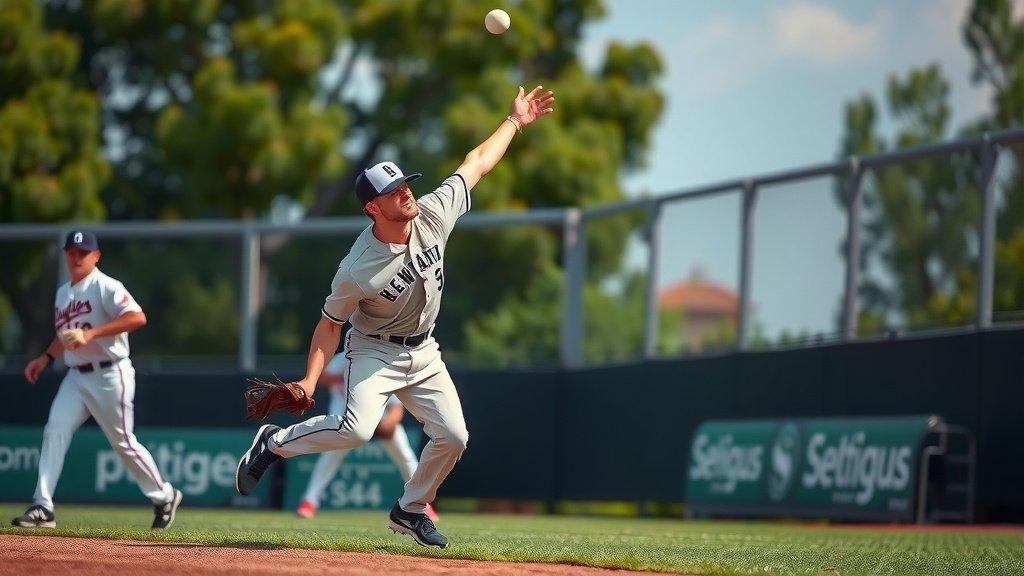
The Actual Catch: Glove and Hands
So, you’ve tracked the ball and positioned yourself. Now it’s time to make the catch. This is where your glove and hands work together.
Using Your Glove Effectively
Your glove is your best friend out there. When the ball is coming down, you want to present a big target. This means opening your glove wide. Many players angle their glove slightly forward. This helps cradle the ball.
Think of your glove as a net. You want to guide the ball into it. Don’t just stab at it. Let the ball come to you and settle into the pocket of your glove. We found that a relaxed hand in the glove helps absorb the ball’s impact.
The “Two Hands are Better Than One” Rule
Once the ball is in your glove, use your bare hand. Reach over and cover the ball. This is often called “securing the catch.” It prevents the ball from popping out. It’s especially important on hard-hit balls or if the ball is spinning.
Many baseball and softball organizations recommend this technique. It significantly reduces errors. You’ve done all the hard work to get there; don’t let it slip away at the last second. A quick cover with your bare hand is a simple but vital step.
Adjusting to Different Types of Fly Balls
Not all fly balls are the same. Some are line drives. Others are deep fly balls. Some are bloopers. You need to adjust your approach for each.
| Type of Hit | What to Do | Key Focus |
|---|---|---|
| Line Drive | Move forward quickly, keep glove low. | Reaction time. |
| Pop-up | Watch the ball, move to a comfortable spot. | Patience and clean hands. |
| Deep Fly Ball | Get back, track the wall, adjust for wind. | Anticipation and awareness. |
| Blooper/Soft Hit | Move forward deliberately, glove ready. | Controlled movement. |
We found that practicing these different scenarios is key. Knowing what to expect makes a big difference. A line drive requires a quick reaction. A pop-up might need a bit more patience. Deep fly balls test your awareness of the field and surroundings.
Putting It All Together: Your Catching Checklist
Here’s a quick rundown to help you remember the key steps. Keep this in mind every time you’re on the field.
- Eyes on the ball from bat to glove.
- Predict the flight path and speed.
- Move your feet to get under the ball.
- Prepare your glove to receive.
- Secure the catch with your bare hand.
- Be ready to adjust if the ball moves unexpectedly.
Remember, practice makes perfect. The more fly balls you attempt to catch, the better you’ll become. Don’t get discouraged by dropped balls. Every attempt is a learning opportunity. Many professionals have spent years honing this skill. You can too!
Conclusion
You’ve learned the key steps to becoming a reliable fly ball catcher. It all starts with tracking the ball from the bat. Then, you need to position yourself correctly using smart footwork. Finally, you focus on the catch itself, using your glove and hands to secure the ball. Remember to always adjust your technique based on the type of hit. The best way to get better is through consistent practice. Keep at it, and you’ll soon be making plays with confidence!
Frequently Asked Questions
What’s the best way to practice catching fly balls?
We found that the most effective practice involves repetition. Have someone hit fly balls to you in a field. Start with shorter, easier distances and gradually increase. Practice in different weather conditions, like windy days, to prepare you for anything.
How do I know if I should run forward or backward for a fly ball?
Watch the ball off the bat. If it’s hit high and deep, you’ll likely need to go back. If it’s hit with a lower trajectory and seems to be dropping quickly, you’ll probably need to move forward. Your initial read of the trajectory is key.
My glove feels stiff. How can I make it better for catching?
We recommend breaking in your glove properly. You can use glove oil or cream. Many players also put a ball in the pocket and wrap the glove tightly overnight. A softer, more broken-in glove makes catching much easier.
What if the sun is in my eyes when I try to catch a fly ball?
This is a common problem. Try to keep your eye on the ball even when it’s tough. Wear a baseball cap pulled down low to help shade your eyes. Some players will also try to catch the ball on their non-dominant side if the sun is directly in front.
How can I improve my reaction time for line drives?
For line drives, your best bet is to stay low and ready. Minimize your initial movements until you’re sure of the ball’s direction. We’ve found that practicing quick, short bursts of speed and keeping your glove low helps immensely.