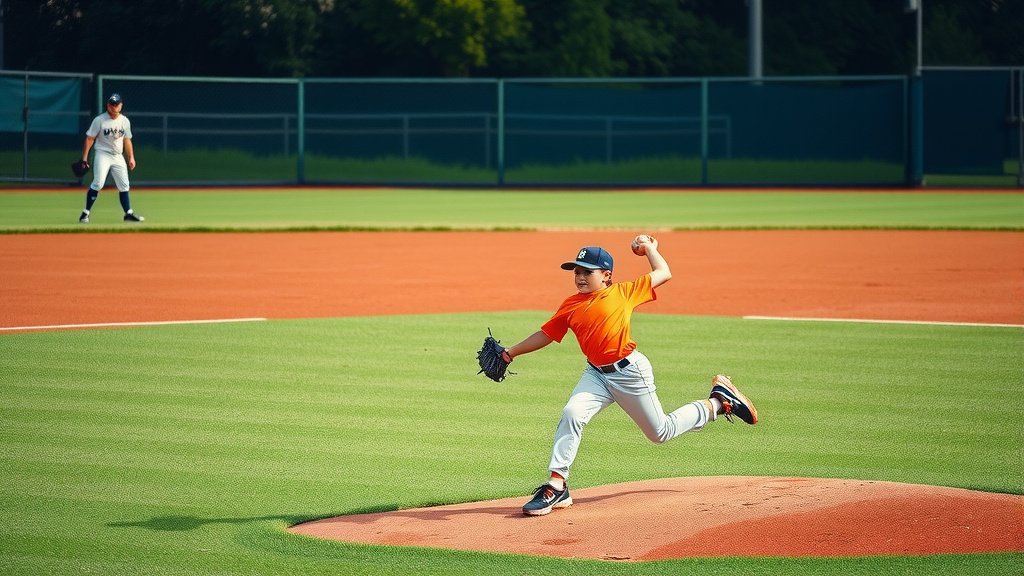
Fun Baseball Pitching Drills for Young Athletes
Pitching drills for kids are a great way to improve their throwing motion and build confidence on the mound. These drills focus on developing proper mechanics and a consistent delivery. You can start seeing improvements quickly with a few fun and effective exercises. We found that focusing on the basics first really helps young pitchers.
Beyond just throwing harder, these drills teach kids about balance, arm speed, and hitting their targets. Building these foundational skills early can prevent bad habits from forming. It’s all about making pitching feel more natural and less intimidating. This will lead to a more enjoyable experience for everyone involved.
- Focus on mechanics, not just speed.
- Build consistency in their delivery.
- Prevent bad habits from forming early.
- Make pitching fun and less intimidating.
- Improve balance and arm speed naturally.
Ready to help your young pitcher shine? Let’s walk through some of the best baseball pitching drills for kids, step by step.
Fun Drills for Building Pitching Skills in Youngsters
Pitching is more than just throwing a ball. It’s a coordinated dance of body and arm. Our goal is to make that dance smooth and repeatable. We found that drills focusing on the fundamentals help kids build a strong foundation. This makes pitching feel less like a chore and more like fun.
The Foundation: Grip and Arm Action
Before even stepping on the mound, getting the grip right is key. A good grip allows for control and different types of pitches later on. Then, the arm action needs to be safe and efficient. We’re talking about a natural, fluid motion, not a jerky one.
Finding the Right Grip
For young pitchers, the four-seam fastball grip is usually the best starting point. You place your index and middle fingers across the widest part of the seams. Your thumb should be underneath, on the smooth part of the ball. This grip tends to offer the most accuracy and a nice, straight trajectory. We found that consistent practice with this grip builds confidence right away.
Smooth Arm Circles
Let’s talk about the arm path. We want a smooth, round motion. Imagine drawing a circle with the ball. Start with small arm circles in front of the body, then gradually make them bigger. The ball should stay close to the body on the way back. This helps prevent the arm from dropping too low, which can cause strain. Many coaches stress the importance of a consistent arm path.
Drills for Better Balance and Footwork
Balance is the unsung hero of pitching. Without good balance, your power fades, and your control wavers. We’ve seen that drills focusing on balance make a huge difference. Good footwork on the mound also helps generate more power from the ground up.
The Balance Drill (Standing Still)
Have your pitcher stand with their feet shoulder-width apart. Ask them to lift one leg, keeping their knee bent. They should hold this position for about 10-15 seconds. The goal is to stay perfectly still, like a statue. This helps them feel their center of gravity. We found that practicing this daily improves their stability significantly.
The Step and Throw Drill
This drill mimics the pitching motion without the full wind-up. Start in your basic stance. Take a small step forward with your non-pitching foot, then throw. Focus on maintaining balance throughout the entire motion. The step should be controlled, not rushed. This drill is excellent for teaching rhythm and sequencing. Many experts say this builds a good sense of timing (Baseball Australia).
The “Chair” Drill
Imagine a chair behind your pitcher. They need to throw the ball while keeping their back leg on the “seat” of the chair. This forces them to stay back and use their lower body for power. They shouldn’t rotate their hips until they’ve released the ball. We found this drill incredibly effective for teaching hip separation and preventing them from “flying open” too early.
Developing Arm Speed and Velocity
While mechanics are king, we also want to see that ball zip! Arm speed comes from good mechanics and proper training. We don’t want kids to just “throw harder” without understanding the correct way. It’s about efficient energy transfer.
Towel Drills
This is a fantastic way to work on arm action without stressing the arm. Have your pitcher hold a small towel, gripping the ends tightly. They’ll go through the pitching motion, snapping the towel at the release point. This helps develop the quick wrist snap and forearm rotation needed for velocity. Research suggests that using resistance like this can help improve arm speed when done correctly (National Strength and Conditioning Association).
Long Toss
As pitchers get comfortable, gradually increasing the distance of their throws is beneficial. Long toss builds arm strength and stamina. Start close and slowly back up, aiming for good, fluid throws. Focus on hitting your partner in the chest. This isn’t about throwing as hard as possible; it’s about a controlled, strong throw over distance. We found that this also helps with accuracy at greater ranges.
Target Practice and Accuracy Drills
What good is a fast pitch if it doesn’t reach the catcher? Accuracy is just as important as velocity. These drills help pitchers learn to hit their spots consistently.
The Target Board Drill
You can buy or even make a simple target board with different zones. Hang it up in the outfield. Have your pitcher aim for specific sections. Start with large targets and gradually move to smaller ones. This makes practicing hitting the strike zone fun and engaging. We found that adding small prizes for hitting targets increases motivation.
The “Tunnel” Drill
This is for practicing the pitcher’s focus. Have a catcher (or even a parent holding a glove) stand about 30-40 feet away. The pitcher focuses solely on the glove, imagining it’s the catcher’s mitt. They must throw the ball directly into the glove. The goal is to block out all distractions. Many young players benefit from this intense focus practice.
Making it Fun and Sustainable
The most important thing is that kids enjoy pitching. If it feels like a chore, they won’t stick with it. We’ve found that incorporating games and variations into drills keeps things fresh and exciting.
Pitching Games
Turn drills into friendly competitions. Who can throw the most strikes in a row? Can you hit specific spots on a target 5 times? Create a “strike zone” with cones. Add up points for hitting different zones. These games make practice feel less like work and more like play. We found that this approach helps build both skills and a love for the game.
Here’s a quick checklist to keep your pitching practice on track:
- Focus on the Grip: Ensure a proper four-seam grip for control.
- Smooth Arm Path: Practice consistent, round arm circles.
- Balance is Key: Work on stability with standing and stepping drills.
- Build Arm Speed Safely: Use towel drills and controlled long toss.
- Hit Your Targets: Practice accuracy with various target drills.
- Keep it Fun: Incorporate games and friendly competition.
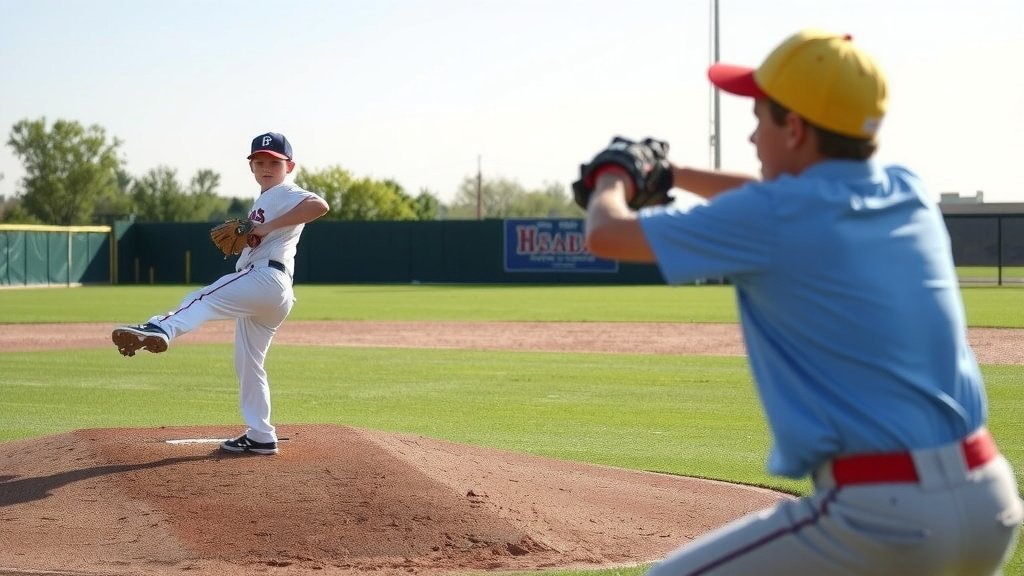
Conclusion
You’ve learned how focusing on fundamental pitching drills can truly transform your young player’s game. We’ve covered everything from mastering the four-seam grip and developing a smooth arm action to building rock-solid balance and improving accuracy. Remember, the key is making practice fun and consistent. By incorporating these drills, you’re not just teaching them to throw; you’re building confidence and a love for the game. So, grab a ball, head to the field, and start practicing these effective techniques today!
Frequently Asked Questions
How often should kids practice pitching drills?
Consistency is key for young pitchers. Aim for 2-3 short practice sessions per week, focusing on different drills each time. Make sure to always include a proper warm-up and cool-down to prevent injuries.
What’s the best way to prevent pitching injuries in kids?
Proper mechanics are your first line of defense against injuries. Focus on drills that build balance and a fluid arm motion. Never push a young pitcher to throw too hard, too soon, and ensure they have adequate rest between outings.
When should kids start focusing on different pitch types?
It’s best for kids to master the fastball grip and delivery first. Generally, around age 12 or 13, once their mechanics are solid, you can introduce basic off-speed pitches like a changeup under proper guidance.
My child seems to lack confidence when pitching. How can drills help?
Confidence often comes from success and feeling in control. Drills that focus on consistency, accuracy, and hitting targets can build that feeling. Celebrate small victories and focus on improvement, not just strikeouts.
Is it okay for kids to use resistance bands for pitching drills?
Resistance bands can be helpful when used correctly and under supervision, particularly for arm strength and conditioning. Always start with light resistance and ensure the proper form is maintained to avoid any strain.