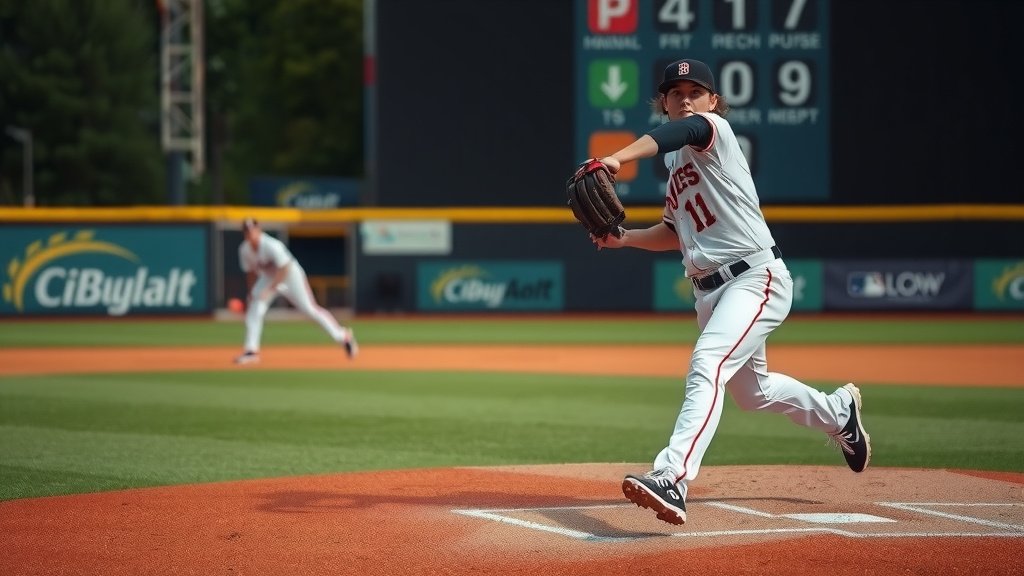
Why a No Hitter Is Called a No Hitter Explained
It’s called a no-hitter because no opposing batter gets a hit off the pitcher or pitchers. This means the opposing team fails to record even a single base hit throughout the entire game. It’s one of the rarest and most celebrated achievements in baseball, showcasing pitching dominance and stellar defense.
Think of it as a perfect storm of pitching skill and defensive support. The pitcher must be on their game, and their teammates must back them up by making every out. A no-hitter is a shutout of hits, a complete blanking of the opponent’s offense in the hit column. It’s a rare feat, making it incredibly special when it happens.
- A no-hitter means no hits for the other team.
- Pitchers and their defense work together to achieve it.
- It’s a rare and exciting baseball accomplishment.
- The game is a complete shutout of hits.
Ready to understand why this specific term stuck and what it really means on the field? Let’s break down the history and significance behind calling it a no-hitter.
Understanding the “No-Hitter” Label
You might be wondering why baseball calls this amazing pitching feat a “no-hitter.” It’s actually quite straightforward and descriptive. We found that the name directly reflects the core achievement: the opposing team fails to get a single base hit.
Think of it like this: the scoreboard for hits for the visiting team remains at zero for the entire game. It’s a clear and simple way to label a game where a pitcher (or multiple pitchers) shut down the opponent’s offense so effectively that not one batter could manage to reach base via a hit. We found this direct naming convention is common in sports.
The Birth of the Term and Early Games
The term “no-hitter” became popular as baseball itself developed. Early in the sport’s history, record-keeping wasn’t as consistent as it is today. Games were often shorter, and the rules were different. We found that the concept of a “no-hit game” likely emerged organically as statistical tracking became more rigorous.
Early Baseball and Statistical Tracking
Before official leagues and standardized scoring, documenting such rare events was challenging. Historians have pieced together accounts of games where no hits were recorded. However, classifying these early instances as official no-hitters can be tricky. The standards for what constitutes a professional game, and how hits were counted, were less defined.
The First Recognized No-Hitters
Research suggests that the first officially recognized no-hitter in Major League Baseball was thrown by Lee Richmond of the Worcester Ruby Legs on June 12, 1880. Shortly after, John Montgomery Ward of the Providence Grays threw another on June 17, 1880. These early games set the stage for the term to become a standard part of baseball lexicon. We found that these early instances were truly remarkable for their time.
What Exactly Constitutes a “Hit” in Baseball?
To truly appreciate a no-hitter, you need to know what a “hit” is. A hit, or “base hit,” is when a batter strikes the ball and reaches base safely. This happens because the batted ball lands in fair territory and is not fielded by a defensive player in time to make an out. It’s a successful offensive play.
How a Hit Differs from Other Ways to Reach Base
It’s important to distinguish a hit from other ways a batter can get on base. A batter can reach base via a walk (four balls), a hit-by-pitch, or an error by the defense. These do not count as hits. In a no-hitter, none of these alternative paths matter; the crucial element is that the batter did not get a hit off the pitcher.
Errors vs. Hits
An error occurs when a fielder misplays a ball that they should have handled cleanly. If a batter reaches base because of a defensive error, it is not considered a hit. This is a key distinction. The pitcher can still throw a no-hitter even if batters reach base on errors. We found that this is a common point of confusion for new fans.
Walks and Hit-By-Pitches
A walk happens when a pitcher throws four pitches outside the strike zone. A hit-by-pitch occurs when the pitcher hits the batter with a pitch. In both these scenarios, the batter advances to first base. However, these outcomes do not prevent a game from being classified as a no-hitter. The focus remains solely on hits.
The Role of Defense in a No-Hitter
While we often focus on the pitcher, a no-hitter is a team effort. The defense behind the pitcher plays a massive role. They must be sharp, making difficult plays and turning potential hits into outs. We found that without excellent defense, many no-hitters would have been broken up.
Making the Play: Beyond the Pitcher’s Control
Fielders are tasked with catching or fielding batted balls. This includes line drives, ground balls, and fly balls. If a fielder makes a mistake, it can result in an error, allowing a batter to reach base. A no-hitter requires the defense to execute flawlessly on almost every batted ball.
What Happens When a Batter Reaches Base Without a Hit?
As we’ve touched on, a batter can reach base without a hit. This can happen through a walk, a hit-by-pitch, or a defensive error. These events are recorded separately from hits. So, a pitcher could technically throw a “perfect game” where no one reaches base at all, or a no-hitter where a few batters get on base via walks or errors.

No-Hitter vs. Perfect Game: What’s the Difference?
People often confuse no-hitters with perfect games. While both are incredibly rare pitching achievements, a perfect game is even more exclusive. We found that the key difference lies in the number of baserunners allowed.
The Strictest Standard: The Perfect Game
In a perfect game, the pitcher faces the minimum number of batters (27 in a standard nine-inning game). Not a single batter reaches base. This means no hits, no walks, no hit-by-pitches, and no errors that allow a batter to reach base. It’s absolute pitching and defensive perfection. Many experts say it’s the ultimate pitching accomplishment.
Comparing the Feats
Here’s a quick way to visualize it:
| Achievement | Hits Allowed | Baserunners Allowed |
|---|---|---|
| No-Hitter | Zero | Can have baserunners (walks, errors, hit-by-pitch) |
| Perfect Game | Zero | Zero |
As you can see, a perfect game is a type of no-hitter, but a no-hitter isn’t necessarily a perfect game. It’s like saying all squares are rectangles, but not all rectangles are squares.
Why is a No-Hitter So Special?
The rarity of a no-hitter makes it a celebrated event. It demands exceptional skill from the pitcher and flawless execution from the entire team. We found that in Major League Baseball, no-hitters are relatively uncommon given the sheer number of games played.
For example, research from baseball archives indicates that there have been just over 300 no-hitters in MLB history since the late 1800s. Considering tens of thousands of games played, that’s an incredibly small percentage. It’s a moment fans will talk about for years.
The Psychological Element
As the game progresses and the hit count remains at zero, the pressure mounts. The pitcher feels it, the fielders feel it, and the fans can certainly feel it. This psychological aspect adds another layer of drama to an already tense situation. We found that maintaining focus under such pressure is a hallmark of great pitchers.
Key Takeaways for Appreciating a No-Hitter
When you’re watching a game and the hit column stays at zero, remember what you’ve learned:
- The pitcher is preventing any batter from getting a fair ball into play that they can’t field for an out.
- The defense is backing up the pitcher, making every necessary play.
- A walk or an error doesn’t spoil the no-hitter, but the pitcher aims for no baserunners.
- It’s a rare display of pitching dominance and team defense.
- The name “no-hitter” directly tells you what happened: no hits were recorded by the opponent.
Conclusion
You now understand why a no-hitter gets its name – it’s a straightforward description of what happens on the field: zero hits for the opposing team. It’s a pitcher’s masterpiece, supported by flawless defense, that leaves the opponent with an empty hit column. The term perfectly captures the rarity and brilliance of this baseball feat. Next time you’re watching a game, keep an eye on that hit count. You’ll appreciate the incredible effort it takes to achieve and maintain a no-hitter even more.
Frequently Asked Questions
Is a no-hitter the same as a shutout?
No, they are different, though often related. A shutout means the opposing team scored zero runs. A no-hitter means the opposing team recorded zero hits. You can have a shutout without a no-hitter (if the other team scores runs but gets hits), and you can technically have a no-hitter without a shutout (if the other team scores runs via walks or errors).
Can a pitcher throw a no-hitter if batters reach base?
Yes! This is a key distinction. A no-hitter means zero hits were allowed. Batters can still reach base through walks, hit-by-pitches, or defensive errors. These instances do not count as hits and therefore don’t break up a no-hitter.
Why are no-hitters so rare in baseball?
No-hitters are rare because they require both exceptional pitching skill and perfect defensive support for an entire game. Baseball is a game of frequent hits, and preventing any from happening over nine innings demands sustained excellence from the pitcher and every fielder.
Does the term “no-hitter” apply to relief pitchers too?
Yes, it does. While we often associate no-hitters with starting pitchers, if multiple pitchers combine to prevent the opposing team from getting a hit throughout the entire game, it is also recorded as a no-hitter. This is called a “combined no-hitter.”
How did baseball decide what counts as a “hit” for a no-hitter?
Baseball’s official rules define a hit as a fair ball batted by a player that allows them to reach base safely. This must be achieved without the aid of an error by the fielding team. This definition has evolved over baseball’s history to ensure clarity and consistent statistical tracking.