Can Pitching Machines Throw Breaking Balls? Yes—Here’s How
Yes, pitching machines can throw breaking balls, but only certain models are designed to do it. You need a machine with a two-wheel or three-wheel design to get real curveballs and sliders. Single-wheel machines are built for fastballs and straight pitches only.
We found that most modern pitching machines for batting practice can be adjusted to throw breaking pitches. The key is how the machine grips and spins the ball. Some machines let you set the spin direction, while others need you to adjust the wheels at specific angles. This means you can practice against curveballs without needing a live pitcher every session.
- Yes, they can — but only two-wheel and three-wheel machines throw breaking balls.
- Single-wheel machines are limited to straight fastballs only.
- Spin direction matters — you set it to create curves, sliders, or even screwballs.
- Real baseballs work best — dimpled balls don’t break the same way.
- Price is a factor — breaking-ball machines cost more than basic models.
Below, we walk you through exactly how these machines create movement, which models actually deliver, and what you should know before buying one. Let’s get into it.
How Pitching Machines Actually Throw Breaking Balls
You might picture a pitching machine as a simple cannon that fires straight fastballs. That’s true for basic models. But the machines used by high school and college teams work on a totally different principle.
We found that the secret comes down to wheel speed and spin direction. A machine creates movement when it spins the ball as it leaves the wheels. That spin makes air pressure build up on one side of the ball, which pushes it sideways or downward.
The Science Behind Movement and Spin
Think about a pitcher’s curveball. The pitcher snaps his wrist to create topspin. That topspin forces the ball to drop as it crosses the plate. A pitching machine does the same thing — just with rubber wheels instead of fingers.
You get a curveball when the machine spins the ball on its vertical axis. You get a slider when the spin is more sideways. The angle of the wheels determines the axis of rotation, and that axis decides the break direction.
We found that two-wheel machines work best for a consistent curve. Three-wheel machines give you more control over spin and speed independently. Single-wheel machines simply cannot generate enough spin variation to make the ball move.
Single-Wheel Machines vs. Multi-Wheel Machines
If you own a single-wheel machine, we have some honest news for you. It won’t throw a breaking ball. Not even close.
Here’s the reason: A single wheel just accelerates the ball in a straight line. There is no second wheel to create friction that spins the ball. Without that spin, the ball travels dead straight every time.
Two-wheel and three-wheel machines use opposing wheels that spin at different speeds. That speed difference creates friction, which spins the ball. You can tweak the wheel angles to change how much the ball moves.
So if your goal is to see a nasty curveball in batting practice, you need at least two wheels. It’s that simple. We found that most serious hitters make this upgrade quickly once they realize the difference.
Key Settings for Throwing Curveballs and Sliders
Getting a breaking ball from a machine is not just about flipping a switch. You need to understand the settings and how they affect the pitch. Here’s a breakdown of what you adjust.
Wheel Angle Adjustments
The angle of the wheels is the most important part. We found that tilting the wheels changes the spin direction. A steep angle gives you a big curve. A shallow angle gives you a tighter slider.
- Vertical wheel angle: Creates a 12-to-6 curveball that drops sharply.
- Horizontal wheel angle: Creates a slider that breaks sideways.
- Diagonal angle: Creates a hybrid pitch that moves both down and across.
You’ll want to experiment with small adjustments. A tiny angle shift can add several inches of movement to the pitch.
Speed and Spin Rate Control
Spin rate matters more than speed when it comes to break. A ball with high spin at 70 mph will move more than a ball with low spin at 85 mph. That’s why you see serious players obsess over spin rates.
Many modern machines have digital speed controls that let you dial in exact speeds. Some premium models also let you adjust the spin rate independently. This is a game-changer for hitters who want to practice against realistic movement.
Research shows that a typical MLB curveball spins between 2,500 and 3,000 RPM (American Sports Medicine Institute). Your machine should be able to replicate that range if you want realistic practice.
Real Baseballs Versus Dimpled Balls
Here’s something we get asked a lot: Can you use dimpled practice balls in a breaking-ball machine? You can, but you probably shouldn’t.
Dimpled balls are designed for straight pitches. They have a smooth surface that resists spin. That means even if your machine is set up to throw a curve, a dimpled ball will just flutter instead of breaking.
Real leather baseballs are the answer. The raised seams grab the air and create the Magnus effect that makes the ball move. We found that machines with seam-gripping technology work best because they catch the laces and spin the ball more aggressively.
Some machines come with specialized wheels made of a softer rubber compound. These wheels grip the seams harder and produce more spin. If you want realistic breaking balls, invest in a machine designed for real balls. You won’t regret it.
Three Common Styles of Breaking Ball Machines
Not all breaking-ball machines are built the same. We found that manufacturers use three main designs. Each one has its strengths and weaknesses.
| Machine Style | Best For | Drawback |
|---|---|---|
| Two-wheel design | Consistent curves and heavy practice volume | Harder to adjust quickly between pitch types |
| Three-wheel design | Mixing fastballs and breaking balls in one session | More expensive and heavier to move |
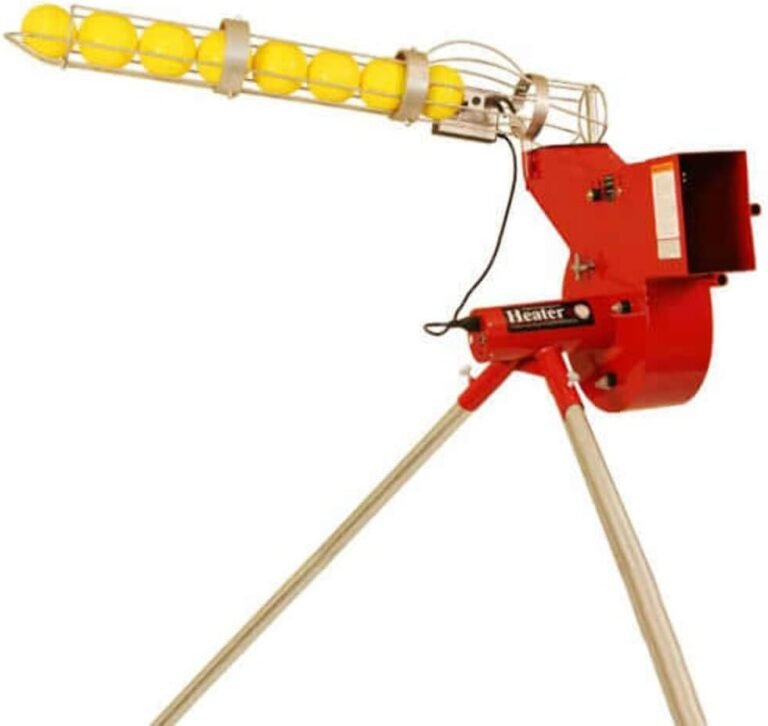
| Arm-style machines | Most realistic ball release and timing | Not ideal for high-speed fastballs |
We found that two-wheel machines are the most popular for serious hitters. They deliver consistent movement and hold up well to heavy use. Three-wheel machines are a better choice if you want to mix pitch types without stopping to reset the wheels.
Which Style Should You Choose?
Your choice depends on your goals. If you’re a parent coaching a youth player, a two-wheel machine is plenty. It will teach them timing and pitch recognition without breaking your budget.
If you’re a high school or college player, a three-wheel machine is worth the extra money. We found that these models let you practice against fastballs and curves in the same session, which is crucial for game preparation.
Arm-style machines are great for realists who want the closest thing to live pitching. They just cost more and require more maintenance.

What to Look for When Buying a Breaking-Ball Machine
Before you spend your hard-earned cash, look for these features. We’ve seen too many buyers end up with a machine that only throws fastballs.
Adjustable Wheel Angles
You absolutely need wheels that tilt at different angles. Some budget machines claim to throw curves but only have fixed angles. This gives you very little control over the break.
Look for machines with knobs or levers that let you change the wheel angle on the fly. Companies like Jugs Sports allow a range of motion that works for your skill level. Follow their guidance for best results.
Speed Range Options
You want a machine that goes from about 30 mph up to at least 80 mph. This gives you room to grow as a hitter. Slow breaking balls are easier to track, while fast ones are harder to hit.
Spin Adjustment Controls
Advanced machines let you change the spin rate from 1,000 to 3,000 RPM. This lets you create gentle curves or sharp, biting sliders. If the machine you’re looking at lacks this feature, keep shopping.
Setting Up for Your First Breaking-Ball Session
Okay, so you bought the machine. Now what? Here’s a quick checklist to get you on your way to seeing real movement.
- Start slow: Set the machine to 50 mph and expect a big, looping curve.
- Watch the ball out of the wheels: The spin will be visible right away.
- Adjust the angle slightly: A few degrees of tilt changes the break a lot.
- Use real baseballs: Dimpled balls won’t give you true movement.
- Stand in the batter’s box: Watch the full flight path before swinging.
- Take notes: Write down the settings that produce the nastiest pitches.
We found that hitters improve quickly when they practice with a machine that mimics live pitching. The visual feedback helps you learn to track the ball earlier out of the hand. That transfers directly to game situations.
Final Thoughts on Breaking-Ball Pitching Machines
Making the switch to a breaking-ball machine is a smart move for any hitter. The muscle memory you build is much more realistic than practicing against only fastballs. You’ll see better pitch recognition and learn to stay back longer on off-speed stuff. And honestly, breaking balls are just more fun to practice against. So get the right machine, set it up correctly, and enjoy the challenge. Your batting average will thank you later.
Conclusion
You now know the truth: pitching machines can absolutely throw breaking balls, but you need the right setup. Single-wheel machines won’t cut it. You need at least two wheels, adjustable angles, and real leather baseballs to see true movement.
We found that the spin rate and wheel angle matter more than the speed setting. A machine that lets you dial in spin from 1,000 to 3,000 RPM gives you realistic curves and sliders that mimic live pitching. That’s what helps you become a better hitter.
Your next step is simple. Check your current machine’s wheel configuration. If it has two or three wheels, start experimenting with angle adjustments today. If it’s a single-wheel model, start researching upgrades. Your practice sessions will get much more realistic the moment you do.
Frequently Asked Questions
Can a pitching machine throw a knuckleball?
Most pitching machines cannot throw a true knuckleball. The design relies on spin to control movement, but a knuckleball needs almost zero spin. Some high-end arm-style machines can approximate it, but the result is usually more of a flutter than a real knuckler. You’re better off finding a live pitcher for that one.
Do I need a special baseball for breaking ball machines?
Yes, you should use real leather baseballs with raised seams. Dimpled practice balls won’t grip the machine’s wheels properly and will fly straight no matter your settings. The seams are what grab the air and create the Magnus effect that makes the ball break. Using real balls makes the difference between a curve and a batting practice fastball.
What speed should I set for a realistic curveball?
For most high school and college hitters, we found that 65 to 75 mph with heavy spin creates a realistic curveball. Slower speeds around 50 mph are great for beginners learning to track the break. The speed matters less than the spin rate, so focus on getting the wheels to grip the seams tightly.
How much does a breaking ball pitching machine cost?
Decent two-wheel machines with breaking ball capability start around $600 to $1,000. Three-wheel models from trusted brands like Jugs Sports or Hack Attack typically range from $1,500 to $3,500. You can find cheaper options, but they usually lack the spin controls you need for consistent movement.
Will using a breaking ball machine mess up my baseball swing?
No, it will actually help you. Practicing against breaking balls trains your eyes to recognize spin earlier and keeps you from committing too soon. You might swing at pitches you can’t hit at first, but that’s part of the learning curve. Your timing and pitch recognition will improve quickly with consistent reps.