

Understanding Baseball Launch Angle: The Key to Power
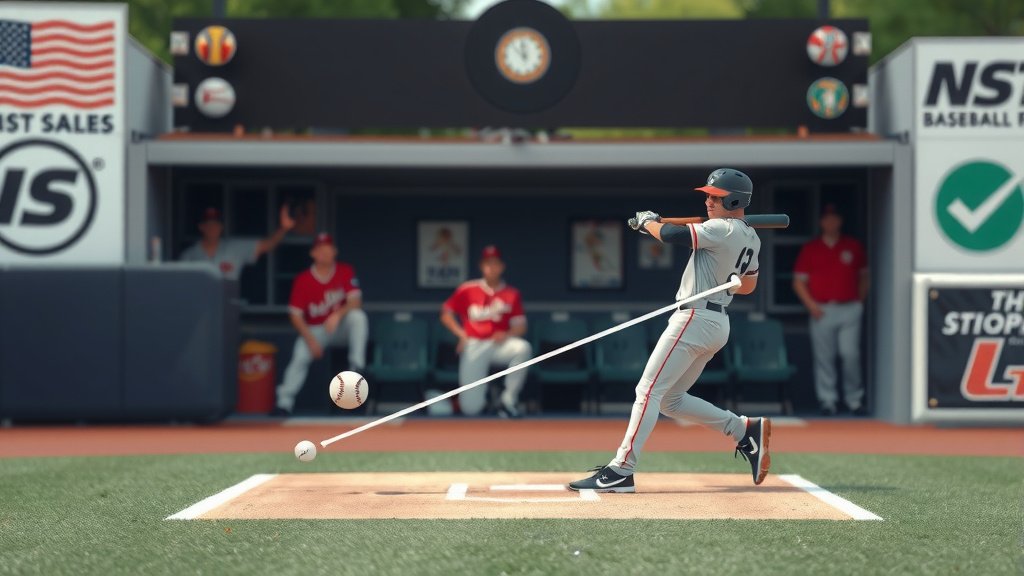
Launch angle in baseball is the upward angle at which a batted ball leaves the bat, measured from the horizontal plane. It’s a critical factor in determining how far and how well a ball travels, directly impacting a hitter’s success. Understanding your launch angle can help you make better contact.
Experts and baseball analytics have shown that a moderate launch angle, typically between 25 and 35 degrees, often results in the most extra-base hits and home runs. This sweet spot allows the ball to carry effectively over outfielders without hitting the ground too soon or flying too high and out of play.
- Launch angle is the upward trajectory of a batted ball.
- It’s measured from the ground up.
- The ideal angle for power hitting is often between 25-35 degrees.
- This angle helps the ball travel farther.
Ready to learn more about what goes into that perfect launch angle and how you can improve yours? Let’s dive in!
“`htmlUnderstanding Your Ball’s Trajectory Off the Bat
So, you’ve heard about launch angle, and you’re probably wondering what it really means for your game. Simply put, it’s the angle your bat strikes the ball, sending it upwards. Think of it like a tiny catapult. The angle it launches at directly influences how far and how well that ball travels. It’s not just about hitting it hard; it’s about hitting it smart.
We’re going to break down why this angle is so important. You’ll learn how different angles affect the ball’s flight. We’ll also look at how you can start working on improving your own launch angle. You might be surprised at how much of a difference a few degrees can make.
What Exactly Is Launch Angle?
Launch angle is the degree to which a ball leaves the bat relative to the ground. Imagine a perfectly flat line as zero degrees. If you hit the ball straight up, that’s 90 degrees. A ground ball might be 5 degrees. A line drive could be 10 degrees. We’re talking about that upward trajectory.
Baseball analytics have really highlighted this stat. It’s not a new concept, but data has shown us just how vital it is. A well-hit ball with a good launch angle is often the difference between an out and a home run. It’s a key piece of the hitting puzzle that every player should understand.
Why Launch Angle Matters So Much
The physics of a baseball hit are pretty fascinating. When you hit the ball, you’re imparting energy. That energy, combined with the angle of your swing and the ball itself, dictates its flight path. A ball hit with too low of an angle might hit the infield grass and be an easy out. A ball hit too high might fly out of play or hit off the outfield wall.
Research has shown that there’s a sweet spot. This range often leads to the most hits, especially extra-base hits like doubles and triples, and of course, home runs. It’s about finding that perfect balance between lifting the ball and driving it forward. You want it to carry, not just pop up.
The Ideal Angle for Power
Many experts and data studies point to a specific range. For maximum power and distance, a launch angle between 25 and 35 degrees is often ideal. Why this range? It allows the ball to get up in the air with enough force to travel a long distance.
Think of hitting a home run. You don’t want to pop it up like a sacrifice fly. You also don’t want to hit a bullet line drive that might just clear the fence. You want that majestic arc. That arc is created by a good launch angle combined with good exit velocity. It’s a beautiful thing to watch when it happens! Think of hitting a home run; that majestic arc is created by a good launch angle.
What Happens with Too Low or Too High Angles?
If your launch angle is too low, say under 10 degrees, you’re likely hitting a lot of ground balls. These are often outs. The ball hits the dirt quickly and is easily fielded by infielders. Even if you hit it hard, it doesn’t have the chance to travel far. It’s like trying to throw a football really far by just rolling it on the ground.
On the flip side, if your launch angle is too high, perhaps over 50 degrees, you’re looking at a lot of pop-ups. These are fly balls that don’t travel very far forward. They hang in the air, giving fielders plenty of time to get under them. This is why a 25-35 degree angle is so sought after; it avoids these extremes.
Factors That Influence Launch Angle
It’s not just about swinging up. Several things come into play when you make contact with the ball. Your bat path is a big one. Are you swinging down, level, or slightly up? The angle of your bat at the moment of impact is crucial. If your bat is angled upwards, it’s going to help create that upward launch angle.
The type of pitch you’re hitting also matters. An uppercut swing might be great for a low pitch, helping to lift it. But against a high pitch, that same swing could send the ball sailing way too high. Your body mechanics, like your hips and hands, also play a role in generating the force and angle.
Bat Path and Angle of Attack
This is where things get a bit technical, but we can keep it simple. Your “angle of attack” is the direction your bat is traveling through the hitting zone. If your bat is coming down sharply on the ball, that’s a steep angle of attack. If it’s coming through more level, or even slightly upward, that’s different.
Many modern hitting philosophies focus on a more “level” swing. However, to create a good launch angle, your bat path needs to be working upwards *through* the contact point. This doesn’t mean swinging like you’re scooping ice cream from the start. It means your bat should be rising as it meets the ball.
The Role of Exit Velocity
Launch angle doesn’t exist in a vacuum. It works hand-in-hand with exit velocity. Exit velocity is simply how fast the ball is traveling off the bat. A ball hit with a 30-degree launch angle but only traveling 60 mph won’t go very far. A ball hit with the same 30-degree angle but traveling 100 mph will be a missile.
The goal is to maximize both. You want high exit velocity and an optimal launch angle. These two metrics together are the biggest predictors of how successful a hit will be. You might hear analysts talk about “barrels.” A barrel is a ball hit with both optimal launch angle and optimal exit velocity.
How Can You Improve Your Launch Angle?
Improving your launch angle is a common goal for hitters. It takes practice and awareness. One of the first steps is simply understanding your current tendencies. Are you hitting too many ground balls? Or are you popping up too often?
You can work on this with drills. Some drills focus on bat path. Others help you feel the right contact point. Don’t be afraid to experiment with different swings in practice. Work with a coach if you can. They can see what you might be missing.
Using Technology for Feedback
If you have access to technology, it can be a game-changer. Devices like radar guns and launch monitors can give you precise data. They can tell you your exact launch angle, exit velocity, and more. This objective feedback is incredibly helpful.
Seeing the numbers can help you understand what changes you’re making are effective. For instance, a launch monitor might show you that when you adjust your stance slightly, your launch angle increases. Or that a specific swing thought leads to a better angle. This data can guide your practice sessions effectively (Baseball America).
Drills to Focus On
Here are a few simple things you can try in practice:
- Tee Drills: Place the ball on a tee at different heights. Practice hitting the ball out in front of you with an upward bat path. Focus on driving through the ball.
- Soft Toss: Have a partner toss the ball gently. Focus on staying through the ball and lifting it. Try to feel a slight upward angle on contact.
- Awareness: Simply think about your bat path. Are you cutting across the ball? Are you dropping your hands? Try to be more intentional with your swing.
- Visualizing the Flight: Before you swing, picture the ball flying with that ideal arc. This mental imagery can help your body make the necessary adjustments.
- Video Analysis: Record yourself swinging. Watch it back to see your bat path and where you’re making contact. Compare it to successful hitters.
Launch Angle and Player Development
The focus on launch angle has transformed how players train and coaches teach. Gone are the days when coaches just told players to “hit the ball hard.” Now, it’s about hitting the ball hard *and* with the right trajectory. We’ve found that this shift has led to more power hitters and a more exciting game to watch.
Understanding your launch angle can help you make small adjustments that lead to big results. It’s about optimizing how you use the energy you generate. It’s a fundamental part of becoming a more effective hitter at any level of the game.
“`
Conclusion
You’ve learned that launch angle is more than just a buzzword; it’s a fundamental part of hitting success. Understanding that 25 to 35 degrees is often the sweet spot for power is key. Remember, it’s a dynamic relationship between your bat path, angle of attack, and exit velocity. Don’t get discouraged if your numbers aren’t perfect right away. Start focusing on one area, perhaps your bat path, and see how it impacts your results. Keep practicing, stay aware, and you’ll be sending more balls into the gaps and over the fence.
Frequently Asked Questions
Does launch angle apply to all types of hitters?
Yes, launch angle is important for hitters of all styles. While power hitters aim for that 25-35 degree range, contact hitters can still benefit from avoiding ground balls. A slightly higher launch angle, even for contact hitters, can lead to more hits through the infield.
Can you hit a home run with a low launch angle?
It’s extremely unlikely. Home runs typically require the ball to carry a long distance, which is best achieved with an upward trajectory. A very low launch angle often results in line drives or ground balls, which lack the carry needed to clear fences.
How does pitch location affect launch angle?
Pitch location plays a big role. Hitting a low pitch often requires an upward swing path to lift the ball. Conversely, trying to lift a high pitch can lead to excessive pop-ups if your swing isn’t adjusted correctly.
Is launch angle more important than exit velocity?
Both are extremely important and work together. A high exit velocity with a poor launch angle won’t go far. Likewise, a great launch angle with low exit velocity won’t have enough power. The ideal scenario is maximizing both.
Can I improve my launch angle without technology?
Absolutely. While technology offers precise data, you can improve by focusing on bat path awareness and feel. Drills like tee work and soft toss, combined with visualizing the ball’s flight, can help you develop a better upward swing through the ball.