What Is a Double Play in Baseball? Explained
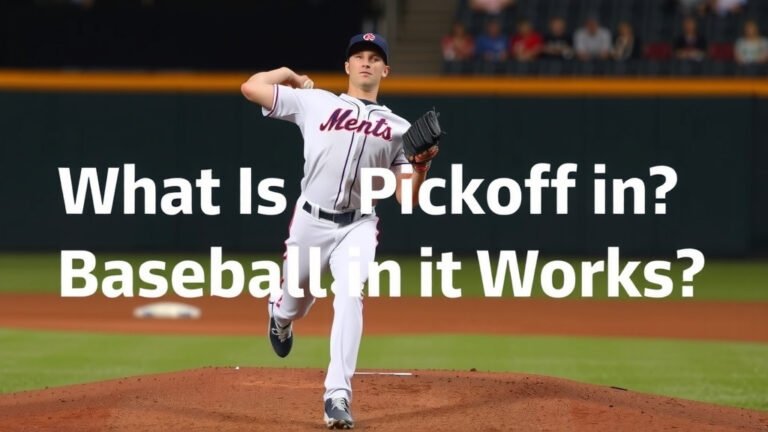
A double play in baseball is a defensive feat where two outs are recorded on a single batted ball. It’s one of the most exciting plays for fans to witness. You’ll often see slick infielders executing this impressive defensive maneuver.
Executing a double play requires quick thinking and excellent teamwork. It’s a common way for pitchers to get out of tough jams. A successful double play can completely shift the momentum of a game.
- A double play means two outs on one play.
- It’s a defensive baseball term.
- It requires quick reflexes and coordination.
- It often involves infielders.
Let’s break down exactly what makes a double play happen and how you might see it unfold on the field.
You’ve seen it on TV. Maybe you’ve even cheered for it at a local ballpark. It’s that magical moment where the defense turns a potential rally into a quick out. But what exactly goes into making this defensive gem happen? Let’s dive deeper into the exciting world of baseball’s double play.
How Baseball Double Plays Work
A double play is a sequence of plays where the defense records two outs on a single batted ball. It’s a crucial defensive strategy. It can stop an opponent’s momentum cold. Think of it as a great way to quickly shut down a big inning.
The Most Common Scenario: The Ground Ball Double Play
The most frequent type of double play involves a ground ball hit to an infielder. This usually happens with runners on first base, or first and second base, and fewer than two outs.
The Role of the Fielder
When a ground ball is hit, the infielder who fields it needs to be quick and accurate. They will often field the ball, step on the nearest base (if they can reach it quickly), and then throw to another infielder covering the next base.
The Second Fielder’s Job
The second infielder’s main job is to catch the throw and tag the runner. Or, they might step on the next base themselves if a runner is forced to advance. This coordination is key. It’s like a perfectly timed dance on the diamond.
Example: The 6-4-3 Double Play
Let’s visualize a common one. A batter hits a ground ball to the shortstop (position 6). The shortstop fields the ball cleanly. They quickly step on second base to get the first out (a force out). Then, they throw to the first baseman (position 3) who catches the ball before the batter reaches first base. This is a 6-4-3 double play (shortstop to second baseman to first baseman). It’s efficient and effective.
Variations on the Ground Ball Theme
Not all ground ball double plays follow the exact 6-4-3 pattern. The players involved can change based on where the ball is hit and which bases have runners.
The 4-6-3 Double Play
If the ground ball is hit to the second baseman (position 4), they might step on second base themselves or throw to the shortstop (position 6) covering second. Then, the shortstop throws to first base. This would be a 4-6-3 double play.
The 5-4-3 Double Play
A grounder to the third baseman (position 5) can lead to a 5-4-3 double play. The third baseman throws to the second baseman (position 4) at second base, who then throws to the first baseman (position 3).
The 3-6-3 Double Play
This one is a bit rarer but happens. The first baseman (position 3) might field a bunt or a softly hit ball. They throw to the shortstop (position 6) covering first base for the first out. Then, the shortstop throws back to the first baseman who has returned to first base for the second out.
Other Types of Double Plays
While ground balls are king, double plays can happen in other ways too. These often require a bit more luck or exceptional fielding.
The Force Out at Home and First
Imagine a ground ball hit to an infielder with runners on first and second. The infielder could throw home to get the runner advancing from third. If the catcher can quickly throw to first base to get the batter, that’s a double play. This is very difficult to execute.
The Fly Ball to Double Play
This is a fantastic play to watch. A batter hits a fly ball that is caught by an outfielder for the first out. However, the runner on base might not have been paying attention or thought the ball would drop. They advance too far from their base. The outfielder throws the ball back into the infield, and an infielder tags the runner or throws to the base they were running from before the runner can get back. This makes for two outs on one fly ball.
The Line Drive to Double Play
Similar to the fly ball, a line drive caught by an infielder can also result in a double play. If a runner on first base takes off running before the ball is hit, thinking it will be a hit, they can be doubled off. The infielder catches the line drive (first out) and then steps on the base they were returning to (second base) or tags the runner returning. This is a quick turnaround.
Why Double Plays Are So Important
Double plays are more than just a cool defensive highlight. They have a massive impact on the game’s flow and outcome.
Stopping Momentum and Ending Innings
When a team gets runners on base, they start to build momentum. A double play can stop that momentum dead in its tracks. It gets the offense off the field quickly. It also prevents potentially big innings from developing. Pitchers love a good double play.
Shifting Game Psychology
Successfully turning a double play can also affect the psychological state of both teams. For the defense, it’s a huge confidence boost. It shows they are playing well and making smart plays. For the offense, it can be demoralizing. It’s a missed opportunity that can make batters more cautious.
The Art of the Infield and the “Infield In”
Sometimes, a manager will call for the “infield in” defense. This means the infielders move in closer to home plate. They do this when there are runners on base and less than two outs. The goal is to prevent the lead runner from scoring on a ground ball. This positioning makes turning a double play more likely but also opens up gaps for hits.
Key Elements for a Successful Double Play
Executing a double play isn’t easy. It requires a combination of factors working together perfectly.
Quick Reflexes and Agility
Infielders need to react instantly to the batted ball. They need to be agile enough to move to the ball, field it cleanly, and make the necessary throws or steps. Baseball research often points to explosive first-step quickness as a key skill for infielders (National Baseball Institute).
Strong and Accurate Throwing Arms
The arm strength and accuracy of the infielders are vital. The throws must be strong enough to reach the target base quickly. They also need to be accurate so the receiving player can catch the ball cleanly without having to stretch too much.
Good Communication and Teamwork
Even the best individual players can’t execute a double play alone. Constant communication is essential. Players need to call out who is getting the ball, who is covering which base, and where they are throwing. This coordination is what makes a double play look so smooth.
Situational Awareness
Players need to know the game situation. How many outs are there? Where are the runners? What is the score? This awareness helps them make the right decisions on the fly. For instance, knowing if a runner is forced to advance or if they can be tagged out changes everything.
Here’s a quick checklist to remember what makes a double play possible:
- Fielding the ball cleanly.
- Quickly getting the first out (usually by stepping on a base or tagging a runner).
- Making an accurate throw to the next base.
- The second fielder catching the ball and securing the second out.
- Excellent communication between all involved players.
- Knowing the game situation and runner’s tendencies.
So, the next time you’re watching a game and you see those infielders work their magic, you’ll have a better appreciation for the skill and coordination involved. It’s a true testament to teamwork and quick thinking on the baseball field.
Conclusion
You’ve now seen how a double play is more than just two outs. It’s a beautiful display of defense that can completely flip the script of a baseball game. From the quick hands of an infielder fielding a grounder to the perfect throw and catch, it all happens in a split second. Remember, next time you watch, look for the communication and teamwork. Understanding this play will definitely make your game-watching experience more exciting. Keep an eye out for these gems!
Frequently Asked Questions
What’s the difference between a force out and a tag out in a double play?
A force out happens when a runner must advance to the next base because a runner behind them is forced to move. The fielder just needs to touch the base. A tag out occurs when a fielder must touch the runner with the ball or the glove holding the ball while the runner is not on a base.
Can a double play happen without an infielder being involved?
Yes, it’s possible but less common. For instance, an outfielder could catch a fly ball (first out) and then quickly throw to a base the runner left too early, allowing an infielder to tag the runner out before they can return. This often relies on runners being out of position.
Is a double play harder to turn with runners on second and third compared to first and second?
Generally, yes. With runners on second and third, there isn’t usually a force play at home, making it harder to get the first out quickly. The defense often has to rely on tagging a runner or getting them out at home, which is riskier and requires more precise throws.
Why do announcers sometimes call a double play by numbers like “6-4-3”?
Those numbers refer to the defensive players involved in the play, using baseball’s standard numbering system. Shortstop is 6, second baseman is 4, and first baseman is 3. So, a 6-4-3 double play means the shortstop fielded the ball, threw to the second baseman at second base, who then threw to the first baseman.
What is the least common type of double play?
While rare plays happen, a 3-6-3 double play is often considered one of the less common ones. This typically involves the first baseman fielding a bunt or weak grounder, throwing to the shortstop covering first for the initial out, and then getting the ball back from the shortstop to record the second out on the batter.