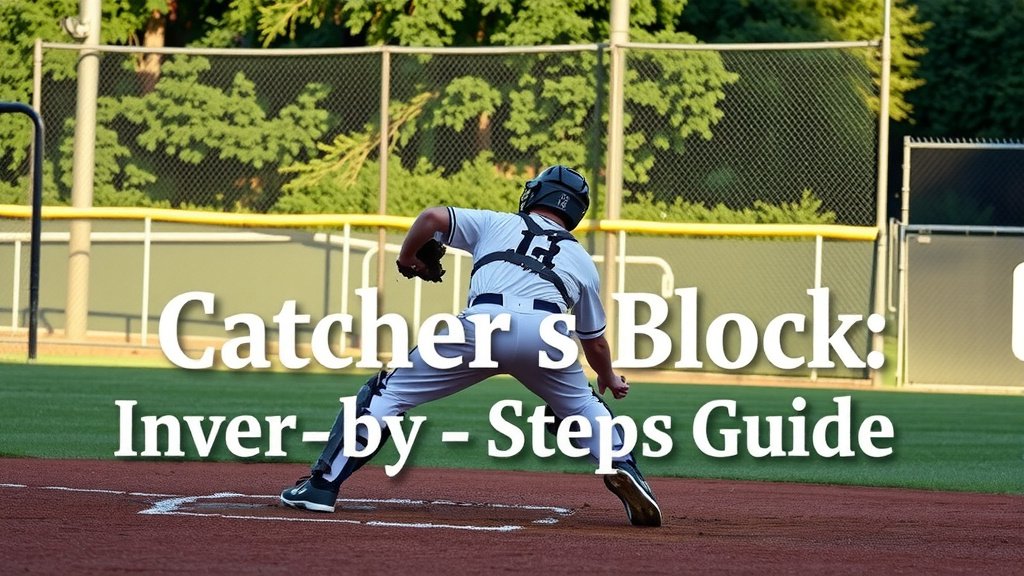
Mastering the Catcher’s Block: A Step-by-Step Guide
Blocking a pitch as a catcher means using your body to stop a baseball or softball from getting past you. You achieve this by getting your **chest and belly in front of the ball** and keeping your **knees bent**. This prevents passed balls and wild pitches, keeping runners from advancing.
Mastering this skill is key for any catcher. It not only helps prevent scoring opportunities for the other team but also builds **trust with your pitcher**. A good blocker looks confident and solid, no matter how wild the pitch might be.
- Get your body behind the ball.
- Keep your knees bent and stay low.
- Use your chest and belly to stop the pitch.
- Practice makes perfect for this essential skill.
Ready to become a brick wall behind home plate? Let’s walk through exactly how to block pitches step by step.
Becoming a Pitch-Blocking Pro Behind Home Plate
Blocking a pitch is one of the most fundamental, yet often overlooked, skills for a catcher. It’s about more than just stopping the ball. It’s about **protecting your pitcher**, shutting down the opponent’s running game, and showing your team you’re a reliable presence. When you block effectively, you build confidence with every pitch. Think of yourself as the last line of defense. A solid block can be a game-changer.
The Foundation: Your Stance and Ready Position
Before any pitch is thrown, your stance is everything. It needs to be athletic and ready for action. You want your feet about shoulder-width apart. Your **knees should be bent** deeply. This isn’t a casual lean; it’s a power position. Keep your back straight and your chest up. Imagine you’re a coiled spring, ready to explode in any direction.
Knees and Ankles: Your Shock Absorbers
Your knees and ankles are key to absorbing the impact of the pitch. They act like built-in shock absorbers. If your legs are straight, you’ll get bounced around. We found that catchers who **bend their knees and ankles** more are better at controlling their bodies. This flexibility allows you to adjust to pitches that might be low or in the dirt. Don’t be afraid to get low!
Hand Placement and Focus
Where do your hands go? Many coaches teach to have your throwing hand tucked in your glove, and your glove out front. Your gloved hand should be facing the pitcher. This presents a big, soft target. Your other hand is inside the glove, ready to secure the ball. Keep your eyes **locked on the pitcher’s release point**. Where the ball goes, your body needs to follow.
The Blocking Technique: Step-by-Step
When a pitch is coming in that you need to block, your reaction needs to be quick and efficient. The goal is to get your body in front of the ball and keep it from getting away from you. We found that a smooth, controlled movement is better than a frantic scramble.
Getting Your Body Behind the Ball
The first instinct should be to move your body towards the ball. If the pitch is low and in the middle, you’ll likely need to drop down. This means sinking your hips and bending your knees even further. You want your **chest and belly** to be the primary stopping point. Think of it as creating a wall with your body.
The “Pancake” Block
This is a common technique for pitches in the dirt. You drop down onto your knees, then let your chest and stomach fall forward. Your feet should be angled slightly to the side, not directly behind you. This allows you to absorb the impact and cradle the ball. Your throwing hand stays inside your glove, preventing it from getting broken by the ball. Many experts say this block is crucial for pitches below the strike zone (Baseball America).
The “Book” Block
For pitches that are a bit higher but still off the plate, you might use what some call a “book” block. This involves dropping your chest down towards your knees, but keeping your feet underneath you. It’s like you’re folding yourself in half. The idea is to catch the ball on your chest protector or the meat of your glove. This requires good flexibility and balance.
Containing the Rebound
Blocking isn’t just about stopping the initial impact. It’s also about controlling what happens next. After you block the ball, it might pop up or bounce away. Your goal is to keep the ball as close to your body as possible. Stay down, relax your arms, and use your glove to control any rebounds. If the ball is in front of you, get your foot on it. This prevents runners from advancing easily. We found that catchers who practice controlling rebounds see fewer passed balls.
Common Mistakes and How to Fix Them
Even experienced catchers can make mistakes when blocking. Awareness is the first step to improvement. Are you making any of these common errors?
Fear of the Ball
This is probably the biggest hurdle. Getting hit by a fastball in the chest or shins stings. It’s natural to flinch. But flinching means you’re not getting your body in front of the ball. Research suggests that repeated, controlled exposure to impacts can help reduce fear (National Strength and Conditioning Association). The more you practice, the more comfortable you’ll become.
Straight Legs and Stiff Body
As we talked about, bent knees are essential. If you’re blocking with straight legs, you’re not absorbing anything. You’re just getting knocked around. Work on your flexibility. Squats and lunges can help improve your range of motion. Try to get your hips lower than your knees when you practice blocking.
Not Getting Your Body Over the Ball
Sometimes, catchers will get their glove down but not their body. This means the ball can sneak through the five-hole (between your legs) or go off the side of your glove. Always think “body first, then glove.” Your chest and belly are your primary blockers.
Ignoring Rebounds
A block is only half the job if the ball rolls away. After you absorb the impact, immediately look for the ball. Keep your knees bent and your body low so you can get to any loose balls. This is where practice really pays off. You need to develop that instinct to recover quickly.
Practice Drills to Improve Your Block
Consistent practice is the only way to truly master blocking. You can’t just hope it works in a game. You need to build muscle memory and confidence. Here are a few drills you can incorporate:
- Soft Toss Blocks: Have a partner gently toss balls at you from close range. Focus on getting your body in front and controlling the rebound.
- Knee-to-Chest Blocks: Start in a kneeling position and have a partner pitch to you. Practice sinking your chest down towards your knees.
- Rolling Ball Blocks: Have a partner roll balls towards you. Practice using your feet and glove to stop and control them.
- Live Pitching Practice: Work with your pitcher on throwing pitches in the dirt or off-target. This is the closest you’ll get to game conditions.
Your Checklist for Better Blocking
Keep this handy as you work on your blocking skills:
- Always get your knees bent.
- Keep your eyes on the pitcher.
- Get your chest and belly in front of the ball.
- Control the rebound.
- Don’t be afraid to get dirty!
- Practice, practice, practice.
Conclusion
You’ve learned that blocking a pitch is more than just stopping a ball; it’s about showing confidence and protecting your pitcher. Remember to always get your knees bent and your body in front of the ball. Mastering your stance and using techniques like the “pancake” or “book” block will make you a solid presence behind the plate. Don’t let the fear of getting hit hold you back. Consistent practice is your key to improvement. Your next step? Get out there and practice those drills! Your pitcher, and your team, will thank you.
Frequently Asked Questions
How do I stop a pitch that’s in the dirt?
For pitches in the dirt, you’ll likely use the “pancake” block. This involves dropping to your knees and letting your chest and stomach fall forward over the ball. Angle your feet slightly out to the sides, not directly behind you, to help absorb the impact and cradle the ball.
What’s the most important part of a catcher’s stance for blocking?
The most important part of your stance for blocking is keeping your knees deeply bent. Your knees and ankles act as shock absorbers. A bent-knee stance allows you to stay low, absorb the impact of the pitch, and adjust to balls in the dirt more effectively.
How can I overcome the fear of blocking pitches?
Overcoming the fear of blocking takes repeated, controlled practice. Start with softer tosses and gradually work up to live pitches. Each successful block will build your confidence and help you become more comfortable with the impact, reducing the natural instinct to flinch.
What should I do immediately after blocking a pitch?
Immediately after blocking a pitch, your focus shifts to controlling the rebound. Stay low with your knees bent and use your glove to corral any bounces. If the ball is loose in front of you, get your foot on it to prevent runners from advancing. Staying disciplined after the initial block is vital.
Should my throwing hand be exposed when blocking?
No, your throwing hand should not be exposed when blocking. Coaches typically teach you to tuck your throwing hand inside your glove. This protects your throwing hand from injury if the ball hits it directly, allowing your glove and body to absorb most of the impact.