Master the Catcher Position: Essential Skills & Tips
Playing catcher in baseball requires a blend of physical toughness and smart decision-making. To play catcher effectively, you need to master several key skills: receiving pitches, blocking, throwing, and framing. It’s a demanding position, but incredibly rewarding when you get it right. Many experienced players say the best catchers are the unsung heroes of the defense.
Beyond the basic mechanics, a great catcher also needs to be a leader on the field. You’ll be calling pitches, managing the game’s tempo, and communicating with your pitcher and infielders. This means you need to understand the game, study opponents, and build strong relationships with your teammates. The role is much more than just catching a ball; it’s about controlling the game.
- Master receiving, blocking, and throwing.
- Learn to frame pitches effectively.
- Understand game management and strategy.
- Develop strong communication skills.
- Build a good rapport with your pitcher.
Ready to learn how to be a standout catcher? Let’s walk through the essential techniques and strategies step by step.
Mastering the Catcher Position: Your Guide to Success
Playing catcher is more than just being behind the plate. It’s about leading, strategizing, and performing under pressure. You’ll be the captain of the defense. Your every move impacts the game. Let’s break down what it takes to be a great catcher.
The Foundation: Receiving Pitches Like a Pro
Receiving pitches is your primary job. A good catcher makes every pitch look like a strike. This helps your pitcher and keeps the count in your favor. It also prevents runners from advancing easily.
Getting Your Stance Right
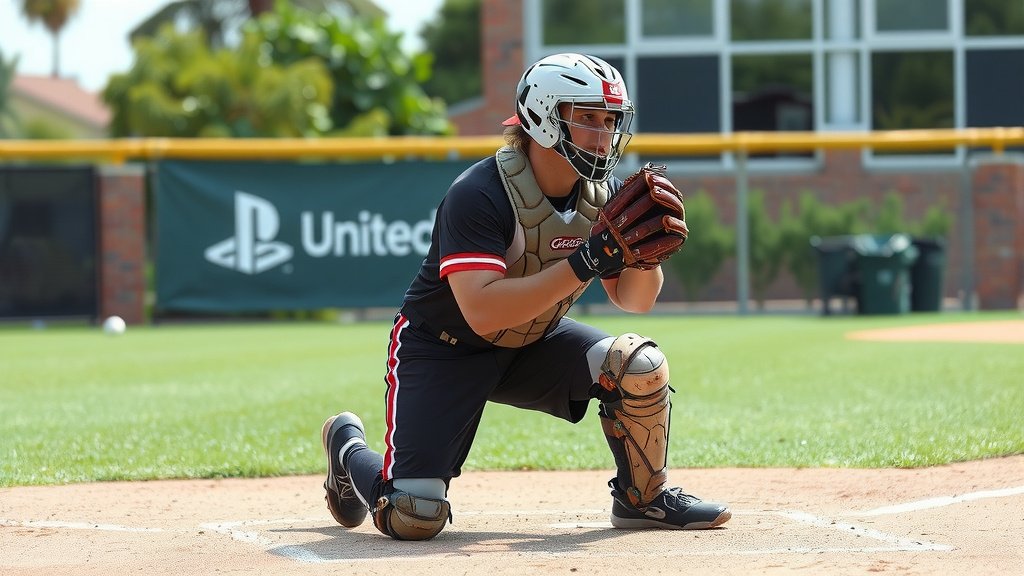
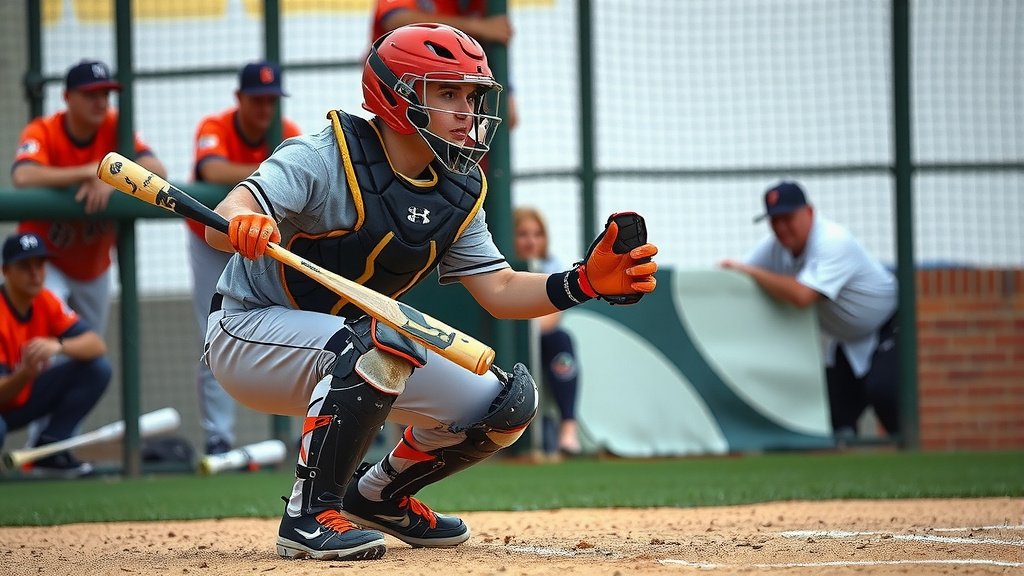
Your stance is the starting point for everything. You need to be comfortable yet athletic. A good stance allows you to move quickly in any direction. It should be balanced and ready for action.
- Knees bent, back straight, and weight on the balls of your feet.
- Chest up, looking over your glove.
- Feet shoulder-width apart, creating a solid base.
The Glove Work: Catching the Ball
Your glove is your best friend. It needs to be soft and secure. You want to create a “stick” with your glove. This means keeping it relaxed until the ball arrives.
As the ball comes in, move your glove to the ball. Don’t let the ball hit your glove. Instead, meet the ball with your glove. This absorbs the impact and makes for a cleaner catch. Many experts suggest a smooth, fluid motion. It’s like catching a butterfly, not slamming a door (USA Baseball).
Receiving Different Pitch Types
Fastballs are straightforward. Just present your glove. Breaking balls and off-speed pitches need more attention. You have to “catch” them with a softer touch. Let your wrist and arm absorb the spin and speed.
For pitches low in the zone, sink into your stance. Your glove should be down, but your body still balanced. High pitches require you to reach up without losing your base. Practice these movements until they are second nature.
Framing Pitches for Strike Calls
Pitch framing is an art form. It’s about making balls look like strikes to the umpire. This isn’t about cheating; it’s about presentation. Your goal is to present the pitch in the strike zone.
When a pitch is on the edge of the zone, you want your glove to move subtly. Move it towards the center of the zone without a big, jerky motion. Small adjustments make a big difference. Research shows that good framing can add extra strikes per game (Baseball Analytics Journal).
The Tough Stuff: Blocking and Protecting the Plate
Sometimes pitches get past the pitcher. That’s where blocking comes in. Your job is to stop those pitches from getting away. This protects your pitcher and prevents runners from advancing.
The Art of Blocking
A good block requires good technique and courage. You need to get your body in front of the ball. Your chest should be over your knees. The ball should hit your chest protector or belly.
When blocking, your glove should be down, protecting the inside of your body. Keep your throwing hand tucked close. This prevents wild bounces and ricochets. Many coaches teach catchers to “trap” the ball.
The key is to get your body in the path of the ball. Think of yourself as a wall. You can’t be afraid to get dirty. Staying low and stable is essential for effective blocking.
Protecting Home Plate
When a runner is coming home, you have to be tough. You are the last line of defense. You must be willing to take a hit to make the out.
A good catcher blocks the plate before the runner arrives. This creates a solid barrier. You need to hold onto the ball. Don’t reach for the runner with the ball. Wait for them to get to you.
Safety is important, of course. But you also need to be competitive. This aspect of catching builds respect from your teammates and opponents.
The Throwing Game: Arm Strength and Accuracy
Your arm is a weapon. You need to be able to throw out runners trying to steal bases. You also need to make accurate throws to cover bases or make plays.
Developing Your Throwing Mechanics
A strong, accurate throw comes from good mechanics. Start with a solid base. Step towards your target with your non-throwing foot. Your arm action should be fluid. Bring the ball up and over your head, then whip it forward.
Practice your footwork. Getting your feet set quickly is vital. You need to get out of your catching stance and into your throwing stance rapidly. Many trainers suggest incorporating specific throwing drills.
Making the Tag Play
Receiving a throw from an infielder is one thing. Applying the tag is another. You need to catch the ball and apply the tag in one smooth motion.
Hold the ball securely in your glove hand. When the runner approaches, extend your glove hand with the ball to tag them. Your body should be between the runner and the plate. Be firm and confident. You are the umpire’s guide for the call.
Game Management and Communication: The Catcher’s Mind
Beyond the physical skills, your mind is your greatest asset as a catcher. You are the field general. You have a view of the entire field.
Calling Pitches and Working with Your Pitcher
You and your pitcher are a team. You need to build trust. Understand their strengths and weaknesses. Work together to decide on the best pitch for each situation.
You’ll often have the responsibility of calling pitches. This involves knowing the opponent’s hitters. Study their tendencies. Are they looking for off-speed? Do they chase high fastballs? This knowledge helps you choose the right pitch. Many veteran catchers develop a keen sense for what the hitter is expecting (MLB Analytics).
Communicating with the Infield
Your voice is loud and clear. Direct your infielders. Let them know where runners are. Tell them who to throw to. Keep everyone organized and focused.
A simple “Mine!” can prevent collisions. A quick alert about a runner heading home is essential. Your communication keeps the defense sharp. It builds confidence and cohesion.
Setting the Tempo
You can influence the game’s rhythm. Slow things down when your pitcher needs a break. Speed things up when you want to put pressure on the offense. You control the pace.
Here’s a quick checklist to keep you on track:
- Practice your receiving stance daily.
- Work on blocking drills at least twice a week.
- Incorporate throwing accuracy drills into your routine.
- Study opposing hitters and their strengths.
- Talk with your pitcher about their comfort level.
- Always communicate clearly with your infielders.
Conclusion
You’ve learned that playing catcher is a demanding but rewarding role. It’s about more than just catching pitches; it’s about leadership and strategy. Mastering your stance, receiving, blocking, and throwing are your physical foundations. Your communication and game management skills are what make you a true leader on the field. Keep practicing these core skills consistently. Your next step is to get out there and apply what you’ve learned in your next game or practice.
Frequently Asked Questions
What is the most important skill for a catcher to develop first?
While all skills are important, focusing on receiving pitches is often the best starting point. A solid foundation in catching the ball makes blocking and framing much easier. It also builds confidence with your pitcher right away.
How can I improve my pitch framing without the umpire thinking I’m stealing strikes?
Pitch framing is about subtle movements. Focus on keeping your glove still until the ball is about to enter it. Then, move your glove towards the center of the strike zone with a controlled, smooth motion. Avoid large, jerky movements that might draw attention.
What’s the best way to practice blocking if I don’t have a live pitcher?
You can practice blocking by having someone roll or toss balls to you. Focus on getting your body behind the ball and trapping it between your chest and glove. Work on your footwork to get into the blocking position quickly.
How important is it for a catcher to know the opposing team’s hitters?
It’s very important! Knowing a hitter’s tendencies, like what pitches they tend to chase or what they struggle with, helps you call the right pitches. This makes you a more effective leader and helps your pitcher succeed.
What should I do if my pitcher seems to be struggling with control?
As a catcher, your role is to support your pitcher. Take a deep breath, go to the mound, and have a calm conversation. Reassure them and discuss what might be working or not working. Sometimes a simple chat can reset their focus.