Baseball Pre-Game Stretches for Peak Performance
Stretching before baseball is essential for preventing injuries and improving your game performance. A good pre-game routine should focus on dynamic movements that warm up your muscles, like arm circles and leg swings. This prepares your body for the demands of pitching, hitting, and fielding, reducing the risk of strains and tears.
You might be wondering if static stretching is better, but research and common practice show dynamic stretching is key for athletes. It helps increase blood flow and range of motion without decreasing muscle power, which is vital for explosive movements on the field. Getting your muscles ready means you can swing harder and throw faster.
TL;DR:
- Always stretch before playing baseball.
- Dynamic stretches are best for warming up.
- They help prevent injuries like strains.
- Dynamic stretches also improve performance.
- Focus on movements relevant to baseball actions.
Ready to get your body game-ready? Let’s walk through some effective stretches you can do before your next baseball game.
“`htmlGetting Your Body Ready to Play: Essential Baseball Stretches
You’ve got your glove, your uniform, and you’re ready to hit the field. But before you dive into the game, your body needs a little prep talk. We’re talking about stretching, and not just any kind. Dynamic stretching is your best friend for baseball.
Why dynamic? Think of it like this: a cold engine sputters, right? Your muscles are similar. They need to warm up gradually to perform at their best and avoid sudden aches and pains. Dynamic movements mimic the actions you’ll actually do in a game, like throwing, swinging, and running.
Why Dynamic Stretching is Your Baseball MVP
Dynamic stretching is all about movement. It gradually increases your heart rate and blood flow to your muscles. This prepares them for the demands of baseball, which involve quick, explosive actions. We found research suggesting that dynamic warm-ups can improve athletic performance.
Static stretching, holding a stretch for a period, is usually better for after the game when your muscles are already warm. Doing too much static stretching beforehand might actually make you feel a bit weaker, which is the last thing you want when you’re trying to make that winning play.
Boosting Performance and Preventing Ouchies
When your muscles are warm and ready, you can move more freely. This means you’ll have a better range of motion in your joints. For a baseball player, this translates to a more powerful swing and a faster pitch. It’s about making your body efficient.
More importantly, a proper dynamic warm-up helps reduce your risk of injury. Things like pulled hamstrings or strained shoulders can sideline you quickly. Getting your muscles limber and ready to work means they’re less likely to get hurt when you ask them to do something intense.
Your Pre-Game Dynamic Warm-Up Routine
Let’s get down to business. This routine focuses on movements that directly benefit baseball players. Remember to move smoothly and controlled through each exercise. No jerky motions!
The Upper Body Tune-Up
Your arms and shoulders do a lot of heavy lifting in baseball. They need special attention. These movements get blood flowing to those key areas.
Arm Circles
Start with small circles, moving your arms forward. Gradually make them bigger. Do about 10-15 circles forward and then 10-15 backward. Keep your arms straight but not locked. This warms up your shoulder joints nicely.
Arm Swings Across the Body
Stand with your feet shoulder-width apart. Swing one arm across your chest as if you’re hugging yourself. Then, swing it back out to the side. Alternate arms, doing about 10-12 swings per arm. This targets your chest and upper back muscles.
Torso Twists
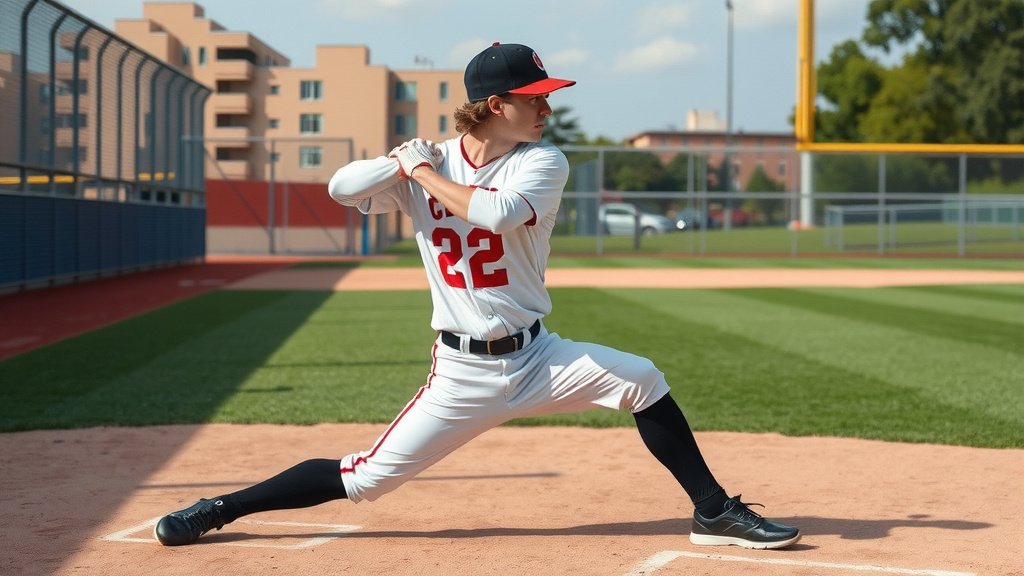
Stand with your feet slightly wider than shoulder-width. Gently twist your torso from side to side. Keep your hips relatively stable. Let your arms swing loosely. This helps loosen up your core, which is vital for hitting power.
Lower Body Readiness
Your legs are your power source for running, fielding ground balls, and even generating force for your swing. Let’s get them ready.
Leg Swings (Forward and Backward)
Hold onto a fence or a wall for balance. Swing one leg forward and backward in a controlled motion. Try to keep your body upright and avoid arching your back. Aim for about 10-15 swings per leg. This warms up your hamstrings and hip flexors.
Leg Swings (Side to Side)
Facing the wall or fence, swing one leg across your body and then out to the side. Keep the movement smooth and controlled. Do about 10-15 swings per leg. This works your hip abductors and adductors, which are important for agility.
High Knees
Walk or jog in place, bringing your knees up towards your chest with each step. As you lift your knee, try to touch it with your opposite hand. Do this for about 30 seconds. It gets your heart rate up and warms your hip flexors.
Butt Kicks
While walking or jogging in place, bring your heels up towards your glutes. You should feel a stretch in your quadriceps. Do this for about 30 seconds. This warms up the front of your thighs.
Full Body Movements for Game Day
These exercises bring it all together, engaging multiple muscle groups and getting you truly game-ready.
Walking Lunges with a Twist
Take a step forward into a lunge, lowering your back knee towards the ground. As you lunge, twist your torso towards the front leg. Return to standing and repeat on the other side. Do about 8-10 lunges per leg. This is a fantastic functional movement.
Inchworms
Start standing, then bend over and place your hands on the ground. Walk your hands forward until you’re in a push-up position. Then, walk your feet forward towards your hands, keeping your legs as straight as possible. Stand up and repeat. Do about 5-8 repetitions. This is great for your entire posterior chain.
Squats (Bodyweight)
Stand with your feet shoulder-width apart. Lower your hips as if you’re sitting back into a chair. Keep your chest up and your back straight. Go as low as you comfortably can. Push back up to the starting position. Do 10-15 squats. This warms up your glutes and quads.
A Quick Checklist for Your Pre-Game Stretch
Here’s a simple rundown to make sure you cover your bases:
- Arm circles (forward and backward)
- Arm swings across the body
- Leg swings (forward/backward and side/side)
- Torso twists
- Walking lunges with a twist
- Inchworms
Remember, consistency is key. Making these dynamic stretches a regular part of your pre-game routine will help you feel better, play better, and stay in the game longer.
“`Conclusion
You’ve got the playbook for a killer pre-game stretch routine! Focusing on dynamic movements like arm circles and leg swings is your ticket to better performance and fewer injuries on the diamond. Remember, warming up properly prepares your muscles for the explosive actions of baseball, from powerful swings to quick sprints. Make these stretches a non-negotiable part of your routine. Your body will thank you, and your game will show it. Now, go out there and play your best!
Frequently Asked Questions
How long should my pre-baseball stretching routine be?
Aim for a dynamic stretching routine that lasts between 10 to 15 minutes. This is enough time to properly warm up your major muscle groups without making you fatigued before the game even starts. Consistency is more important than length.
Can I do static stretches before a baseball game?
While static stretching has its place, it’s generally best saved for after your game when your muscles are already warm. Research and athletic practice suggest that dynamic stretching is superior for pre-game warm-ups, as it prepares your muscles for movement without reducing power.
What if I have limited time before a game?
If time is tight, prioritize the key dynamic movements. Focus on arm circles, torso twists, and leg swings. Even a quick 5-minute routine hitting these essential movements will make a difference in preparing your body for play.
Should I stretch differently for pitching versus hitting?
The core dynamic stretches benefit both. However, pitchers might want to pay extra attention to shoulder and hip mobility, while hitters can emphasize hip rotation and core activation. The routine provided covers the bases for all positions.
Where is the best place to do my stretches before a game?
Find a space where you have room to move freely, like an open area on the field or in the dugout. Make sure the ground is stable and comfortable for movements like lunges or inchworms. Staying near your teammates can also be motivating!