Master Your Baseball Warm-Up: Essential Drills
Warming up for baseball properly is key to **preventing injuries** and **boosting your performance** on the field. A good warm-up gradually increases your heart rate, gets your muscles ready to move, and prepares your body for the demands of the game. It’s not just about running around; it’s about intentional movements that mimic baseball actions.
To get the most out of your baseball warm-up, you need to focus on dynamic stretching and sport-specific drills. We found that many players skip this vital step, thinking a quick jog is enough. But a truly effective warm-up involves activating your core and mimicking throwing and swinging motions to prime your body for action.
- Get your heart pumping.
- Stretch muscles dynamically, not statically.
- Mimic game actions like throwing and swinging.
- Focus on agility and quick movements.
Ready to build a warm-up routine that will have you feeling great and playing your best? Let’s walk through exactly how to warm up for baseball, step by step.
Preparing Your Body for Baseball Action
Getting ready for a baseball game isn’t just about showing up. Your body needs proper preparation to perform its best. Think of your warm-up as tuning up a high-performance engine. You wouldn’t just start a race car cold, right?
A smart warm-up routine ensures your muscles are ready for quick bursts of activity. It also helps prevent those nagging injuries that can sideline you. We found that many players underestimate the power of a well-structured warm-up. It’s about more than just breaking a sweat.
The Power of Dynamic Stretching
Forget those static stretches you might remember from gym class. For baseball, dynamic stretching is king. Static stretches involve holding a position for a period. Dynamic stretches use controlled movements to prepare your muscles for action.
Dynamic movements mimic the actual actions you’ll perform on the field. This means your muscles and joints learn to move through their full range of motion safely. Research consistently shows dynamic warm-ups are superior for athletes (Journal of Strength and Conditioning Research).
Lower Body Dynamic Movements
Start with movements that get your legs ready. These prepare you for running, fielding ground balls, and quick pivots. Your legs are your foundation on the diamond.
- Leg Swings (Forward and Backward): Stand tall and swing one leg forward and backward in a controlled motion. Keep your core tight. Do 10-12 swings per leg.
- Leg Swings (Side to Side): Facing a wall or fence for balance, swing your leg across your body and then out to the side. Aim for 10-12 swings per leg.
- Walking Lunges with a Twist: Step forward into a lunge, then twist your torso towards your front leg. Alternate legs with each step. Perform 10-12 lunges per leg.
- High Knees: March or jog in place, bringing your knees up towards your chest. Focus on an active movement. Do this for 30 seconds.
- Butt Kicks: Jog lightly in place, kicking your heels up towards your glutes. This targets your hamstrings. Do this for 30 seconds.
Upper Body Dynamic Movements
Your arms and shoulders do a lot of work in baseball. Pitching, hitting, and throwing all require a prepared upper body. These exercises get blood flowing and improve shoulder mobility.
- Arm Circles (Forward and Backward): Make small circles with your arms, gradually increasing the size. Perform 10-12 forward and 10-12 backward circles.
- Arm Swings (Across the Body): Swing your arms across your chest, reaching one arm over the other. Alternate which arm is on top. Do 10-12 swings per side.
- Torso Twists: Stand with feet shoulder-width apart and gently twist your upper body from side to side. Keep your hips relatively stable. Perform 10-12 twists per side.
- Cat-Cow Stretch: On your hands and knees, arch your back up towards the ceiling (cat) and then let your belly drop towards the floor, looking up (cow). Repeat 5-10 times.
Activating Your Core and Hips
Your core and hips are central to almost every baseball movement. A strong, stable core transfers power from your lower body to your upper body. This is essential for hitting and throwing velocity.
We found that exercises targeting these areas can significantly improve your athletic output. They also help stabilize your spine during powerful movements. Many sports scientists highlight the importance of core strength (National Institutes of Health).
- Bird-Dog: On your hands and knees, extend one arm straight forward and the opposite leg straight back. Keep your core engaged and back flat. Hold for a few seconds, then switch sides. Do 8-10 reps per side.
- Glute Bridges: Lie on your back with knees bent and feet flat on the floor. Lift your hips off the ground, squeezing your glutes. Hold briefly and lower. Aim for 12-15 reps.
- Standing Hip Rotations: Stand on one leg and rotate your opposite knee outwards and then inwards. This mobilizes your hip joint. Do 10-12 rotations per leg.
Sport-Specific Drills to Prime Your Game
After general preparation, it’s time to get specific. These drills mimic actions you’ll do during the game. They help your body transition from warm-up to game-ready.
This phase ensures your neuromuscular system is firing on all cylinders. It’s about making sure your brain and muscles are connected for baseball actions. Many coaches suggest this is where you really start to feel “ready to play.”
Throwing Progression
Your arm needs to be gradually warmed up for throwing. Start close and gradually increase the distance and intensity. This prevents shoulder strain.
Begin with light tosses to a partner. Focus on smooth, controlled mechanics. Don’t try to throw hard or far right away. Your goal is to feel the ball leave your hand cleanly.
- Short Toss (20-30 feet): Focus on accuracy and feel.
- Medium Toss (40-60 feet): Increase the pace slightly, still focusing on mechanics.
- Long Toss (70-100+ feet): Throw with more velocity. This is where you build arm strength for the game.
Hitting and Fielding Drills
These drills prepare your muscles for the explosive movements of swinging a bat and fielding a ball. They also help with hand-eye coordination.
Even a few swings off a tee can make a difference. For fielding, simulate ground balls and fly balls. Your body learns to react quickly and efficiently.
- Tee Work: Take 5-10 swings on a tee, focusing on good contact and bat speed.
- Soft Toss: Have a partner toss balls softly to you. Work on timing and driving the ball.
- Ground Ball Series: Have a partner hit or roll you ground balls. Practice your footwork and glove work.
- Fly Ball Series: Have a partner hit you fly balls. Work on tracking the ball and making the catch.
Agility and Quickness Drills
Baseball requires sudden changes in direction. These drills improve your ability to move quickly and change pace.
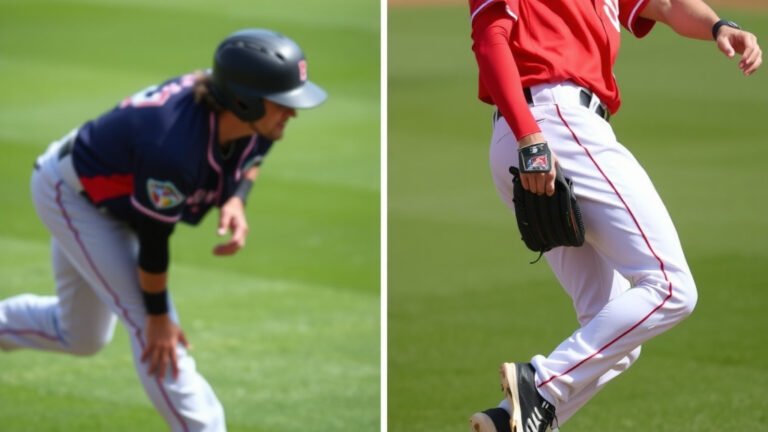
Think about a shortstop diving for a ground ball or an outfielder sprinting to catch a fly ball. These movements need to be sharp and efficient. Agility work sharpens those responses.
Here’s a quick checklist to ensure you’re covering the bases in your warm-up:
- Get your heart rate up with light cardio.
- Perform dynamic stretches for your entire body.
- Include core and hip activation exercises.
- Gradually warm up your throwing arm.
- Do sport-specific hitting and fielding drills.
- Finish with agility movements.

Cooling Down After the Game
While we’re focusing on warming up, don’t forget about cooling down. A proper cool-down helps your body recover. It can also reduce muscle soreness.
After the game, a few minutes of light jogging or walking can help. Then, transition into static stretching. Holding stretches for 20-30 seconds can improve flexibility over time.
Static stretches target major muscle groups used in baseball:
| Body Part | Static Stretch Example | Hold Time |
|---|---|---|
| Hamstrings | Seated forward fold (reach for toes) | 20-30 seconds per leg |
| Quadriceps | Standing quad stretch (pull heel to glute) | 20-30 seconds per leg |
| Calves | Downward-facing dog or calf stretch against a wall | 20-30 seconds per leg |
| Shoulders/Chest | Doorway chest stretch or arm across the body | 20-30 seconds per side |
| Back | Child’s pose or lying spinal twist | 20-30 seconds |
Making this routine a habit will set you up for success on the field. It’s an investment in your performance and your long-term health as an athlete.
Conclusion
You’ve learned that a smart baseball warm-up is more than just a few jogs. It’s about **dynamic stretching**, **core activation**, and **sport-specific drills**. Getting your body ready prevents injuries and boosts your performance. Remember to gradually increase intensity with activities like throwing progressions and hitting practice. Don’t forget agility work to sharpen your game-day reactions. Make this routine a habit before every practice and game. You’ll feel the difference on the field, playing stronger and safer. Your next step is to **implement one new drill** from this guide into your routine this week!
Frequently Asked Questions
How long should a baseball warm-up take?
A thorough baseball warm-up typically takes between 20 to 45 minutes. This allows you to cover all the essential bases, from general cardio to sport-specific movements. Rushing through it can make it less effective, so plan your time accordingly before games and practices.
Can I skip dynamic stretching if I’m short on time?
We strongly advise against skipping dynamic stretching. It’s key to preparing your muscles for explosive movements and preventing injuries, which is more important than saving a few minutes. If you’re really pressed for time, focus on the most critical dynamic movements for your position.
Is it better to warm up on the field or off?
You can start your warm-up off the field with light cardio and dynamic stretches. Then, move to the field for sport-specific drills like throwing, hitting, and fielding. This transition helps your body adapt to the game environment before competition begins.
What if I’m a pitcher? Do I need a different warm-up?
Pitchers need a comprehensive warm-up, with extra focus on their arm and shoulder. The throwing progression is especially important for pitchers. Gradually increasing distance and intensity protects your arm and builds stamina for the game.
How do I know if my warm-up is good enough?
You’ll know your warm-up is effective if you feel warm, loose, and ready to play. Your muscles should feel activated, not fatigued. You should feel a connection between your mind and body, ready for quick reactions and powerful movements on the field.