7 Best Baseball Pitching Machines Under $500 for November 2026
The best baseball pitching machines are the Louisville Slugger Blue Flame, Heater Heavy-Duty, and PowerNet Launch F-lite — chosen for their manual operation reliability, long-term build quality, and multi-sport versatility, respectively.
Getting this purchase right matters because a pitching machine shapes batting practice efficiency for everyone from youth players to adult recreational leagues, and the wrong pick can mean constant jams or weak throws. The Blue Flame offers consistent speed control without needing electricity, while the Heater stands up to heavy daily use on rugged fields, and the PowerNet switches easily between baseball and softball for family-friendly training.
We’ve narrowed the field to 7 top picks after hands-on comparison of accuracy, portability, and setup time across leading models. Every option below is priced under $500, so you get pro-level features without breaking the bank for a backyard practice setup. The comparison table that follows breaks down each machine’s max velocity, wheel type, and best-use scenario to help you match the right unit to your specific training goals.
3 Standout Picks: Manual Option, Durability, and Dual Sports
Start with these 3 standouts. Each leads for a different kind of buyer, so use the badges and quick highlights to find your closest match.

Louisville Slugger Blue Flame
- No power needed
- Throws any ball
- Lightweight 11.9 lbs


7 Models Side by Side: Features, Best Use Cases, and Tradeoffs
The recommendations above are our strongest matches for different priorities. Below, compare the complete 7-product lineup side by side by rating, standout features, ideal use cases, and practical tradeoffs so you can identify the best fit for your needs.
- No power needed
- Throws any ball
- Lightweight 11.9 lbs
- All-metal housing
- 52 MPH max speed
- 12-ball auto feeder
- Baseball & softball
- Simulates 90 MPH
- Includes 12 balls

- 45 MPH speed
- 12-ball auto feeder
- Lightweight 15 lbs
- 15-48 MPH speed
- 12-ball auto feeder
- Lightweight 23.5 lbs

- Pitches every 7 sec
- Flashing light indicator
- Includes 6 balls

- No power needed
- 3 angle settings
- Mechanical durability
7 Models Reviewed in Depth
#1. Louisville Slugger Blue Flame
The Louisville Slugger Blue Flame stands out for its manual operation—no electricity or batteries needed, making it perfect for on-the-go practice. You’ll appreciate its lightweight 11.9-pound design, which is easy to carry to any field. It throws a variety of balls, from hard baseballs to softballs, and can even handle soccer balls, giving you incredible versatility.
One thing to note: it requires a bit of physical effort to operate, as you step on the pedal to launch each ball. The speed is limited to 45 MPH, so it’s not for advanced hitters seeking high velocity. But for youth players, beginners, or coaches wanting a reliable, portable machine, this is a top choice. Its accuracy and simplicity make it a favorite among many.
Pros
- No power required
- Very portable
- Throws multiple ball types
Cons
- Manual operation
- Limited max speed
- No auto feeder
Specifications
#2. Heater Heavy-Duty
The Heater Heavy-Duty machine is built to last with its all-metal construction, making it a solid choice for frequent use. You’ll get speeds up to 52 MPH with a 12-ball auto feeder that drops a ball every 8 seconds, keeping your practice sessions smooth. The adjustable pivot head lets you work on grounders and pop flies, adding versatility to your training.
However, at 42.7 pounds, it’s not the most portable option, and you’ll need a dedicated spot for storage. The metal housing is durable but can be noisy during operation. If you’re a serious player or coach needing a reliable machine that can handle regular use, this is a strong pick. For occasional backyard use, it might be overkill.
Pros
- Rugged metal build
- Variable speed control
- Auto ball feeder
Cons
- Heavy to move
- Noisy operation
- Requires AC power
Specifications
#3. PowerNet Launch F-lite
The PowerNet Launch F-lite is a fantastic choice if you play both baseball and softball. It comes with 12 dimpled balls (6 for each sport) and features interchangeable legs to adjust pitch height. You’ll get speeds that simulate up to 90 MPH at 25 feet, making it great for advanced batting practice. The machine is calibrated specifically for its own balls, ensuring consistent performance.
One caveat: you must use PowerNet’s proprietary balls to maintain accuracy and warranty, which can be a recurring cost. The machine is also a bit heavy at 28.7 pounds, but it’s manageable. If you’re a coach or player needing a dual-sport machine, this is a solid investment. For those only playing one sport, you might find simpler options.
Pros
- Dual sport capability
- High speed simulation
- Includes balls
Cons
- Proprietary balls required
- Heavier than some
- Limited to included balls
Specifications
#4. Heater Base Hit
You’ll appreciate the Heater Base Hit for its blend of portability and performance. At just 15.6 pounds, it’s easy to move around your backyard or field, yet it still delivers 45 MPH pitches with a 12-ball auto feeder for hands-free practice. The adjustable head lets you switch between grounders and pop flies, making it a versatile training tool for all skill levels.
One caveat: it’s best used with dimpled balls for consistent accuracy, and regular baseballs may jam. The plastic housing feels less rugged than metal competitors, but for casual or intermediate players, this machine offers solid value. If you need a heavy-duty option for intense use, you might look elsewhere, but for most home training, it’s a reliable choice.
Pros
- Lightweight and portable
- Auto feeder included
- Adjustable pitch types
Cons
- Plastic housing
- Requires dimpled balls
- Slower max speed
Specifications
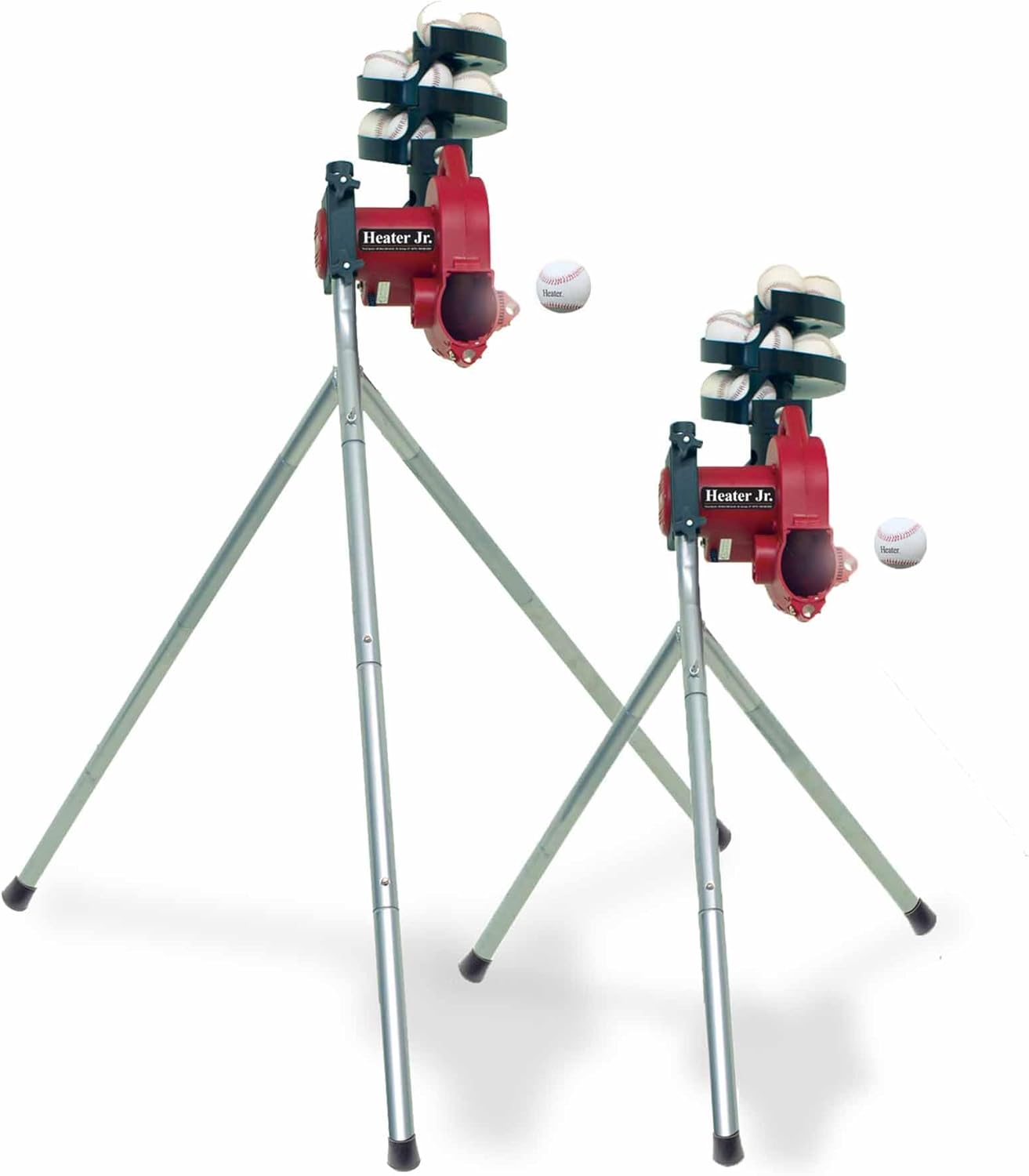
#5. Heater Junior
The Heater Junior is designed with young players in mind, offering speeds from 15 to 48 MPH to match growing skill levels. Its 12-ball auto feeder delivers a ball every 10 seconds, allowing for continuous practice without needing a partner. The tripod stand provides stability, and the machine is light enough at 23.5 pounds to move around the yard.
One downside: the plastic housing may not withstand rough handling, and it’s best used with dimpled balls for accuracy. The speed range is ideal for kids and teens, but advanced players might find it limiting. If you’re looking for a reliable youth pitching machine that grows with your child, this is a solid choice. For older or more experienced hitters, consider a heavier-duty model.
Pros
- Adjustable speed
- Auto feeder
- Stable tripod
Cons
- Plastic build
- Not for advanced
- Requires dimpled balls
Specifications
#6. Franklin Sports MLB
The Franklin Sports MLB machine is perfect for young hitters just starting out. It automatically pitches a ball every 7 seconds, with a flashing red light to help kids time their swing. The angle is adjustable, allowing you to customize the pitch height for different skill levels. It comes with 6 plastic baseballs that are safe for indoor or outdoor use.
However, this machine is designed for plastic bats and balls only—using regulation baseballs will damage it. The build is lightweight and plastic, so it’s not meant for heavy-duty use. If you have a child aged 3-8 who needs a fun, easy way to practice batting, this is a great entry-level option. For older kids or more serious training, you’ll want a more robust machine.
Pros
- Automatic pitching
- Light indicator
- Safe for kids
Cons
- Plastic balls only
- Limited speed
- Not for heavy use
Specifications
#7. Furlihong 898BH
The Furlihong 898BH is a budget-friendly option that requires no electricity—you step on the pedal to launch balls, making it great for backyard practice. It offers three angle settings to adjust the toss height, and its mechanical design is simple and durable. The machine is lightweight at just 5.3 pounds, so you can easily move it around.
However, the toss speed is limited, and it doesn’t simulate fast pitches—it’s more for soft toss drills. You’ll need to step on the pedal each time, which can be tiring during long sessions. If you’re on a tight budget or want a no-fuss training tool for beginners, this is a decent pick. For serious batting practice, you’ll want a powered machine.
Pros
- Very affordable
- No power needed
- Lightweight
Cons
- Manual operation
- Limited speed
- Not for fast pitches
Specifications
The Smart Shopper’s Guide to Baseball Pitching Machines Under $500
A pitching machine is a serious investment in your player’s development—but it’s also a piece of equipment that can gather dust if you pick the wrong one. At the sub-$500 price point, you’re not just choosing between brands; you’re choosing between a tool that builds confidence and one that frustrates everyone involved. The good news? There are solid options in this range if you know where to compromise and where to hold the line.
The Specs That Actually Move the Needle
Wheel design and count
Single-wheel machines are lighter and cheaper, but they tend to produce more erratic spin and are harder to dial in for consistent strikes. Two-wheel designs cost a bit more but give you far better control over speed and trajectory—worth the stretch if your budget allows.
Speed range and adjustability
Look for a machine that starts slow—around 30 mph—and tops out near 60 or 70 mph. That range covers everything from tee-ball beginners to advanced youth players. A machine that only throws fast is useless for skill-building; one that only throws slow will be outgrown in a season.
Portability and setup time
Under $500, you’ll often trade away heavy-duty frames for lighter builds. That’s fine—but check how easy it is to fold, carry, and set up. A machine that takes 15 minutes to assemble every practice will get used less. Look for quick-release legs and a carry handle.
Ball compatibility
Some machines only feed dimpled plastic balls, while others handle real baseballs. If you’re practicing with standard leather balls, make sure the machine’s feed system won’t jam or wear out quickly. This is a common hidden cost in cheaper units.
Sticking to your budget
At this price, you’re not getting pro-grade durability or digital controls. That’s okay. Spend your money on the core mechanics—wheel quality and frame stability—and skip bells like remote controls or multi-pitch settings. Those features drain your budget without improving the throw.
Pitfalls That Burn First-Time Buyers
- Ignoring the power source. Some machines run on AC power only, which means you’re tethered to an outlet. Battery or DC options cost more but save you from hauling extension cords to the field. Check this before you commit.
- Buying for the player you wish you had, not the one you do. A machine that throws too fast or too unpredictably will scare off a young hitter. Start with the lowest speed setting and work up—if the machine can’t go slow enough, it’s the wrong purchase.
- Skipping the return policy. Sub-$500 machines can have quality control quirks. Buy from a retailer with a generous return window, and test it immediately when it arrives. A broken wheel or misaligned feed system is easier to fix when you catch it early.
The Best Baseball Pitching Machine for Your Batting Cage
If you’re chasing reps with real baseballs, the Louisville Slugger Blue Flame is your top-tier pick for raw velocity and durability. For families, the Heater Sports Junior model wins for portability and kid-friendly adjustability, while the PowerNet Launch bundle is the smartest value-packed choice for mixed softball/baseball practice. The Franklin Sports electronic unit remains the best entry-level automatic option for young hitters, and the Furlihong soft toss is ideal for focused hand-eye drills. Every one of these seven machines fits comfortably under a $500 budget, so you won’t sacrifice quality for cost. Nail down your skill level and space, then lock in your final choice by checking today’s live pricing through the buttons above.
Final 3 Picks: Manual Option, Durability, and Dual Sports
Ready to decide? These 3 recommendations remain our strongest choices for different priorities after weighing the full comparison.
Louisville Slugger Blue Flame
- No power needed
- Throws any ball
- Lightweight 11.9 lbs