Baseball Batters: Where to Look for a Better Swing
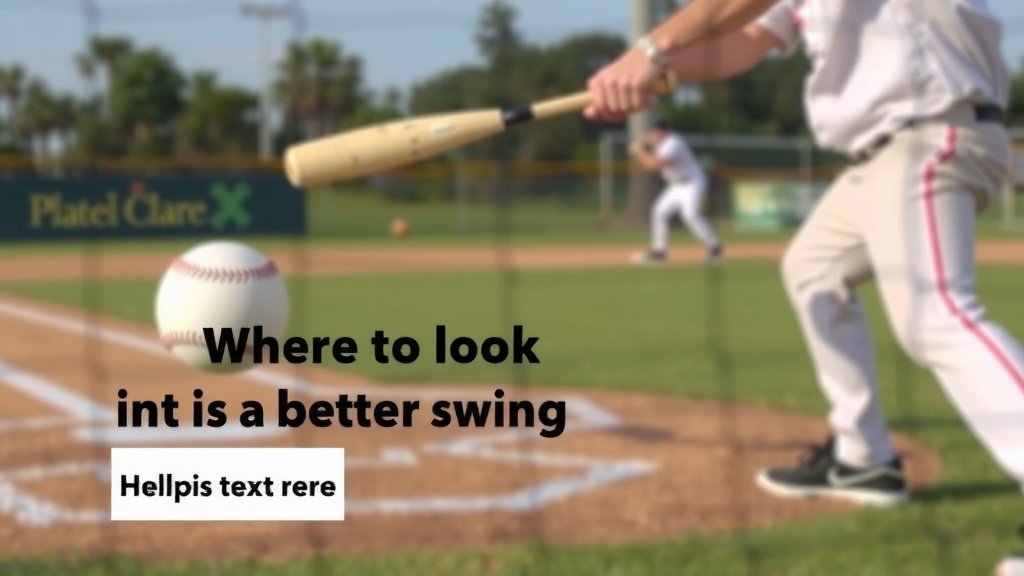
When hitting a baseball, you should focus your eyes on the point where the ball meets the bat. This is the absolute best place to look for maximum contact and power. Looking here helps you time your swing perfectly.
Many players struggle with where to look. Some might watch the pitcher’s arm or the ball too early. Focusing on the strike zone is also good, but the exact impact point is key. This strategy is a common piece of advice from hitting coaches.
- Focus on the exact point of contact.
- This helps you time your swing better.
- Avoid looking at the pitcher’s release point.
- Don’t track the ball too early in its flight.
- Keep your eye on the ball until it’s hit.
Let’s break down why this works and how you can practice it effectively.
Where to Aim Your Gaze When Swinging a Bat
So, you’re stepping up to the plate. The pitcher is on the mound, ready to deliver. You know you need to connect. But where exactly should you be looking? The secret is simple. Focus on the spot where the ball and bat will meet.
Why is this so important? It helps you track the ball’s trajectory. It keeps your head steady. This leads to better contact and more power. Let’s dive into why this works and how you can master it.
The Science Behind the Sweet Spot Focus
Our eyes are amazing tools. When we focus on a specific point, our brain processes that information. This helps our body react. When hitting a baseball, your brain needs to know exactly when to swing. Looking at the impact point gives it the best data.
Think of it like catching a ball. You don’t stare at the pitcher’s hand. You watch the ball all the way into your glove. The same principle applies to hitting. Your visual focus is key to timing and accuracy.
Why Other Spots Don’t Cut It
You might have heard advice like “watch the pitcher’s release.” Or maybe “keep your eye on the ball the whole time.” These aren’t entirely wrong, but they lack precision. Let’s see why.
The Pitcher’s Release Point Trap
Watching the pitcher’s arm or the moment the ball leaves their hand is a common habit. It feels like you’re getting an early start. However, this can trick your brain. You might start your swing too soon. This leads to poor timing and often missed balls.
Many coaches found this to be true. Players who focus on release often swing at pitches that are too far away. They haven’t let the ball travel enough. It’s like trying to catch a frisbee before it’s even thrown.
Tracking the Ball Too Early
Some batters try to follow the ball from the pitcher’s hand all the way to the plate. This sounds like good tracking, right? But for hitting, it’s different. Your eyes can get confused. The ball appears to move faster. Your brain might misjudge the speed and distance.
Research suggests that our eyes are better at processing information at closer ranges. When the ball is near the plate, its path is more defined. This is when your brain can best calculate the timing for your swing.
The Sweet Spot: Your Visual Anchor
So, what is this “sweet spot”? It’s the precise location where the bat should connect with the ball. For most hitters, this is just in front of home plate. It’s where the ball is at its optimal height and speed for your swing.
By focusing here, you give your brain a clear target. It doesn’t need to guess. It knows what to look for. This visual anchor helps you stay locked in on the ball.
How It Improves Timing and Power
When you focus on the impact point, your body naturally adjusts. Your hands will get to the right position. Your bat will accelerate through the zone. This leads to better timing. You’ll be more likely to square up the ball.
When you square up the ball, you transfer more energy. This is where your power comes from. A solid, clean hit feels different. It sounds different too. That satisfying “crack” means you hit it right.
Developing Your “Impact Point” Vision
This skill doesn’t always come naturally. It takes practice. But it’s achievable for any player. You need to train your eyes to focus on that specific spot.
Practice Drills for Better Focus
There are several ways you can work on this. Even without a live pitcher, you can improve. Try these simple drills:
- Tee Work: Place a ball on a batting tee. Position it where you would typically want to make contact. Focus intently on the front of the ball. Swing and try to hit that exact spot.
- Soft Toss: Have a partner toss the ball gently from the side. Your job is to focus on the point where you’ll hit it. Don’t worry about hitting it hard at first. Just focus on contact.
- Mirror Drills: Stand in front of a mirror with your bat. Practice your swing. Focus your eyes on an imaginary ball where you would make contact. This helps you get the feel for your head staying still.
Many hitting instructors suggest starting with a slightly open stance during practice. This can help you see the ball better out of the pitcher’s hand and track it to the impact zone.
The Mental Game: Trusting Your Eyes
It can be tough to fight old habits. You might feel an urge to flick your eyes away too soon. Trust the process. You’re training your brain to do something new.
Remind yourself of the goal. You want solid contact. You want to feel that bat meet the ball perfectly. Your visual focus is the tool to get you there.
Common Mistakes and How to Avoid Them
Even with the best intentions, hitters can fall into old traps. Being aware of these mistakes is the first step to fixing them.
The “Peek-a-Boo” Hitter
This is the player who glances away from the ball just as they swing. It’s often out of habit or nervousness. They might “peek” to see if they’re going to miss.
To fix this, visualize success. Imagine yourself hitting the ball squarely. Remind yourself that your focus is on the impact. You’re not trying to avoid striking out; you’re trying to hit the ball hard.
The “Follower” Hitter
This hitter tries to follow the ball with their eyes all the way through the swing. While some elite athletes can do this, it’s not ideal for most. It can cause your head to move too much.
The key is to let your head stay steady through contact. Think of your head as a camera lens. It needs to be focused and still at the moment of the photo (the hit).
Putting It All Together at the Plate
So, you’re in the batter’s box. The pitcher is winding up. What’s your action plan?
1. Get Set: Take your comfortable stance. Feel grounded.
2. Track the Ball: Watch the ball from the pitcher’s hand.
3. Shift Focus: As the ball nears, shift your visual focus to the impact point.
4. Swing: Trust your eyes and your swing mechanics.
5. Follow Through: Let your body complete the motion.
It takes conscious effort. But by focusing on the spot where the ball meets the bat, you give yourself the best chance for success. You’ll be amazed at the difference it makes.
Conclusion
You’ve learned that focusing on the point of contact is your best bet for hitting success. This visual anchor helps you time your swing and generate more power. Forget trying to track the ball too early or watching the pitcher’s release. Your eyes are your most important tool for connecting with the ball. Start implementing these focus techniques today in your practice. You’ll see your consistency and confidence grow at the plate. Keep your eyes locked on that sweet spot, and happy hitting!
Frequently Asked Questions
Will focusing on the contact point help me see the ball better?
Yes, focusing on the contact point actually helps you track the ball more effectively. It gives your eyes a clear target as the ball approaches. This helps prevent your vision from becoming unfocused or trying to track too early.
Is it okay to look at the ball until it’s in the catcher’s glove?
No, you should not follow the ball all the way into the catcher’s glove. This is a common mistake that can lead to your head moving during the swing. Your focus needs to be on the point of impact for the best results.
How can I practice keeping my eyes on the contact point?
You can practice this by using a batting tee and focusing on the front of the ball before you swing. Soft toss drills are also great for honing this skill. The goal is to train your eyes to lock onto that specific spot.
What if I naturally want to look at the pitcher’s face?
It’s a habit many hitters develop, but it’s not the most effective. Try to consciously shift your focus from the pitcher’s body to the ball as it comes closer. Imagine a target zone just in front of the plate and aim your vision there.
Does my stance affect where I should look?
While your stance is important for balance and power, your visual focus point remains the same. Some coaches suggest a slightly more open stance can help you see the ball better from the pitcher’s hand through to the impact zone. This can make it easier to keep your eyes locked on.