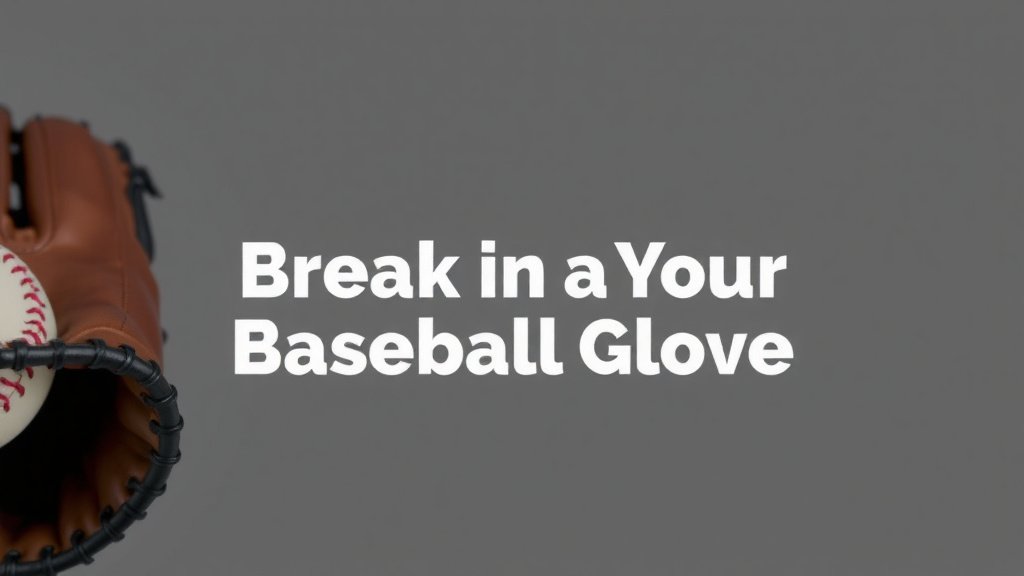
Break in Your Baseball Glove: A Step-by-Step Guide
Breaking in a baseball glove might seem tough, but it’s totally doable! You can soften and shape your new glove so it feels like an extension of your hand with a few simple methods. The most effective way involves proper conditioning and consistent play.
This process helps your glove mold to the shape of your hand and the ball. It’s about making sure your gear is ready for game day. A well-broken-in glove means fewer errors and more confidence on the field. We’ve researched various techniques to find what truly works best.
- Condition your glove regularly.
- Play catch and practice fielding.
- Use a glove mallet or your hands.
- Store it properly when not in use.
Let’s walk through the best ways to get your glove game-ready. We’ll cover everything from what to use to how much time it takes.
“`htmlGetting Your New Baseball Glove Game Ready
Breaking in a new baseball glove is a rite of passage for any player. You want it to feel like a natural extension of your hand, ready to snag everything hit your way. It’s not about making it soft just for comfort; it’s about shaping it for peak performance.
We’ve gathered the best, most efficient methods to achieve that perfect glove feel. You’ll get it ready for those crucial plays in no time. This guide focuses on what really works to speed up the process without damaging your investment.
Understanding Your Glove’s Needs
When you first get a glove, it’s often stiff and rigid. The leather is usually treated to protect it during shipping and storage. This means it needs a little coaxing to become flexible and ready for action. Your goal is to soften the leather and create a pocket that fits the ball perfectly.
Think of it like breaking in a new pair of cleats. They need to mold to your feet. A glove needs to mold to the ball and your hand. This process takes time and consistency. Patience is key, but we can certainly help you navigate it.
The Essential Conditioning Steps
Conditioning is the foundation of breaking in any glove. It’s about nourishing the leather and making it pliable. We found that using the right conditioning products is incredibly important. Avoid anything too greasy or oily, as it can damage the leather over time.
Choosing the Right Conditioner
Many glove manufacturers recommend specific conditioners. These are often petroleum-based or lanolin-based. They help keep the leather supple. You can find these at most sporting goods stores. Sometimes, a small amount of a quality leather conditioner is all you need.
We found that a little goes a long way. Over-conditioning can make the glove too heavy or greasy. This can affect your grip and the glove’s durability. Always read the product instructions carefully.
Applying the Conditioner
The best way to apply conditioner is with a clean, soft cloth. You want to rub a small amount into the leather. Focus on the palm and finger areas where the glove will flex the most. Don’t forget the lacing, as they can also become stiff.
Allow the conditioner to soak in for a few hours, or even overnight. Then, wipe off any excess. Your glove should feel slightly more supple after this first treatment. This is a great starting point.
Working the Glove: Pocket Formation Techniques
Once your glove is conditioned, it’s time to start shaping the pocket. This is where the glove really begins to take on a personalized feel. There are several effective ways to do this.
The Power of Play
The most natural way to break in a glove is by playing catch. Every time you field a ball, you’re reinforcing the pocket. Try to catch the ball in the same spot repeatedly. This helps the leather remember where to close.
We found that playing catch with a heavier, slightly older ball can help speed this up. The extra weight encourages the pocket to form. Also, have a friend or teammate throw to you with a little extra heat. This requires the glove to work.
Manual Shaping and Massaging
Your hands are powerful tools. Gently squeezing and massaging the glove when you’re not playing can also help. You want to encourage it to close naturally. Imagine it’s like working with clay.
You can also use your fist to push into the pocket. This helps create a deeper, more defined pocket. Work the glove in the areas where you want it to bend and close. Be firm but don’t force it too aggressively. You don’t want to tear the leather.
The Glove Mallet Method
A glove mallet is a specialized tool designed for this purpose. It’s a weighted rubber or leather mallet. You use it to repeatedly tap and pound the pocket area of the glove.
We found this method is quite effective for loosening stiff leather. It mimics the impact of catching a ball. Again, be consistent and focus on the pocket. Don’t overdo it in one session. Aim for a few minutes of tapping, then some play.
The “Glove in the Ball” Method
This is a classic technique. Place a baseball or softball firmly in the pocket of your glove. Then, wrap the glove tightly with a rubber band, elastic wrap, or even string. Leave it like this overnight or for a few days.
This method helps maintain the shape of the pocket. It keeps the glove closed around the ball. Many players swear by this technique for creating a consistent pocket. You can combine this with other methods.
Strategic Storage for Continued Break-In
How you store your glove when you’re not using it plays a role. Proper storage helps maintain the shape you’ve worked hard to create. It also protects the leather.
Keeping the Pocket Intact
When storing your glove, make sure it’s in a closed position. You can use the “glove in the ball” method described earlier. Alternatively, you can use a glove clamp or even a heavy book placed on top of the closed glove.
Avoid leaving your glove in a crumpled state. This can create unwanted creases and damage the leather. A consistent shape will aid in faster, more effective break-in. We found that dedicated glove bags also help.
Climate Control Matters
Keep your glove in a cool, dry place. Extreme heat can dry out the leather, making it brittle. Excessive moisture can lead to mold and mildew, which can ruin the glove. A climate-controlled environment is best.
Never leave your glove in a hot car or direct sunlight for extended periods. These conditions can cause irreparable damage. Think of your glove like a fine piece of leather outerwear; it needs care.
How Long Does It Really Take?
The time it takes to break in a glove varies. Factors include the type of leather, how stiff it is, and the methods you use. Some gloves are made from softer leather and break in more quickly.
Generally, you can expect it to take anywhere from a few weeks to a couple of months for a glove to feel truly broken in. Consistent play and conditioning are the biggest accelerators. You’ll know it’s ready when it feels comfortable and reliably catches the ball.
Quick Checklist for Glove Break-In Success
Here’s a quick rundown of the steps to get your glove ready:
- Apply a quality leather conditioner sparingly.
- Play catch consistently, focusing on pocket formation.
- Gently massage and squeeze the glove daily.
- Use a glove mallet or the “ball in pocket” method.
- Store your glove properly in a closed position.
- Repeat conditioning and shaping as needed.
Conclusion
Breaking in your new baseball glove is all about patience and consistent effort. You’ve learned that proper conditioning nourishes the leather, while regular play and shaping techniques form that perfect pocket. Remember, using quality conditioners and avoiding harsh methods will protect your glove’s integrity. By combining these steps, you’re well on your way to a glove that feels custom-made.
Your next step is simple: put these techniques into practice. Grab your glove, a ball, and head outside for some catch. You’ll feel the difference with every throw and snag. Enjoy the process and get ready to play your best ball!
Frequently Asked Questions
Can I speed up breaking in my glove using heat, like a microwave or oven?
We strongly advise against using heat sources like microwaves or ovens. These methods can severely damage the leather, making it brittle and prone to cracking. This will ruin your glove and compromise its performance. Stick to conditioning and playing catch instead.
How often should I condition my new baseball glove?
For a new glove, we recommend conditioning it lightly every few days during the initial break-in period. Once it’s broken in, condition it about once a month, or whenever the leather feels dry. Over-conditioning can make the glove too heavy, so a little goes a long way.
Is it okay to use oil like olive oil or peanut butter on my glove?
While some people suggest household oils, we found that it’s best to use conditioners specifically designed for baseball gloves. These products are formulated to maintain leather’s flexibility without causing damage or attracting dirt. Household oils can leave your glove greasy and potentially degrade the leather over time.
What’s the best way to store my glove when I’m not using it?
The best way to store your glove is in a closed position, ideally with a ball placed in the pocket. You can then wrap it with a glove strap or elastic band to maintain that shape. Store it in a cool, dry place, away from extreme temperatures, to protect the leather.
My glove feels too stiff even after a few weeks. What else can I do?
If your glove remains stiff, try focusing more on playing catch and practicing fielding drills. The repeated impact of the ball will help soften the leather. You can also gently massage and squeeze the glove by hand when you’re not playing, or use a glove mallet for a few minutes each day.